There’s nothing quite as disruptive as the incessant squeak of a metal bunk bed, turning peaceful nights into a symphony of creaks with every movement. A squeaky bunk bed is not only an annoyance but can also hint at underlying structural issues that might need attention. Fortunately, most noisy metal bunk beds can be silenced with a few quick and straightforward DIY fixes, transforming your children’s room back into a quiet sanctuary. This guide will walk you through identifying the source of the noise and applying effective solutions to bring back the calm.
Why Your Metal Bunk Bed Squeaks: Common Culprits
Understanding the root cause of the noise is the first step toward a quiet night’s sleep. Metal bunk beds are prone to squeaking primarily due to friction between components.
Loose Screws and Bolts
Table is empty.Over time, the constant pressure, movement, and general wear and tear can cause the screws and bolts that hold the bed frame together to loosen. This common issue allows metal parts to rub against each other, generating those irritating squeaks every time someone shifts. Regularly checking these fasteners can prevent noise before it starts.
Metal-on-Metal Friction
Even when tightly secured, metal surfaces can sometimes rub directly against each other. This direct metal-on-metal contact, particularly at joints or where slats meet the frame, creates friction that translates into noise. This is especially true as protective coatings wear away, exposing raw metal.
Worn-Out Parts
Older bunk beds may develop squeaks due to worn or damaged components. Metal fatigue, bent slats, or deteriorated support beams can lead to increased movement and friction within the frame. Rusty or stripped screws can also contribute to the problem, preventing a secure fit.
Lack of Lubrication
Just like any mechanical system, metal joints benefit from lubrication. If the metal parts become dry and lose their initial lubrication, they will rub together with greater friction, leading to creaking sounds. This is often an overlooked aspect of bed frame maintenance.
Uneven Surfaces or Weight Distribution
An uneven floor or a bunk bed with wobbly legs can place undue stress on specific joints, causing them to squeak. If the bed frame isn’t level, the weight won’t be distributed evenly, leading to certain parts bearing more load and, consequently, more friction and noise. Similarly, placing too much weight on one side or exceeding the bed’s weight limit can exacerbate squeaking.
Essential Tools for a Squeak-Free Bunk Bed
Before you dive into the repair, gather a few basic tools and materials. Most of these are common household items, ensuring you can tackle the problem quickly.
- Screwdriver or Allen Key: Essential for tightening loose bolts and screws. You might need various sizes.
- Wrench: For hex nuts or larger bolts that an Allen key might not fit.
- Metal-Safe Lubricant: Options include WD-40, silicone spray, or white lithium grease. Silicone spray is often preferred for its long-lasting, dust-resistant properties.
- Padding Materials: Felt pads, foam strips, or rubber washers. These act as buffers between metal parts.
- Clean Cloth: For wiping away excess lubricant or cleaning joints.
- Spirit Level (Optional but Recommended): To check if your bunk bed is sitting evenly on the floor.
- Work Gloves: To protect your hands while working.
Step-by-Step Guide to Fixing a Squeaky Metal Bunk Bed
Silence doesn’t have to be a distant dream. Follow these steps to systematically eliminate the squeaks from your metal bunk bed.
1. Pinpoint the Source: The Squeak Hunt
The first crucial step is identifying exactly where the squeak is coming from. Start by stripping the bed down: remove the mattresses, bedding, and pillows. Detach any headboards or footboards if they are removable. Now, systematically press down, push, and shake different parts of the bare frame. Pay close attention to joints, connection points, and where slats meet the frame. If the noise only occurs in specific spots or with certain movements, you’ve narrowed down your investigation. Sometimes, the mattress itself can be the culprit, so test it on the floor if you suspect it.
2. Tighten Every Fastener
Loose screws and bolts are the most frequent cause of squeaking and often the easiest to fix. Using the appropriate screwdriver, Allen key, or wrench, go over every single fastener on the bunk bed frame. Ensure all bolts, nuts, and screws are securely tightened, but avoid overtightening, which can strip threads or damage the frame. This step can significantly reduce or even eliminate the majority of squeaks immediately.
3. Lubricate the Joints
If tightening doesn’t fully resolve the issue, lubrication is your next best friend. Friction between metal parts is a prime cause of noise, and a good lubricant can drastically reduce it.
Choose a metal-safe lubricant like silicone spray, white lithium grease, or WD-40. Silicone spray is often recommended because it provides long-lasting lubrication and is less likely to attract dust than oil-based alternatives. Apply a thin, even layer directly to all joints, connection points, and any areas where metal rubs against metal. You might need to temporarily loosen a joint, apply the lubricant, and then re-tighten it for maximum effectiveness. Wipe away any excess lubricant with a clean cloth to prevent dust accumulation.
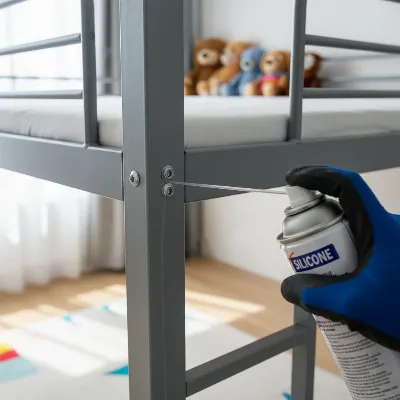 Expert applying metal-safe lubricant to a squeaky metal bunk bed joint.
4. Introduce Padding and Barriers
Sometimes, metal components rub together even when tight. Inserting a barrier can prevent this friction.
- Felt Pads or Rubber Washers: Place thin felt pads or rubber washers between any metal-on-metal contact points. This is particularly useful at the connection points of the frame, where side rails meet the headboard or footboard, or where slats rest on support beams.
- PTFE Tape: For screw threads that might be slightly loose or creating friction, wrap a small amount of PTFE tape (often used by plumbers) around the threads before re-inserting and tightening. This can provide a tighter fit and reduce movement without overtightening.
- Rubber Grommets: If you notice specific areas where two parts rub continuously, a rubber grommet can act as a cushioning buffer, absorbing vibrations and reducing noise.
5. Address Unevenness
An uneven bunk bed frame can lead to stress on its structure, causing creaking.
- Check the Floor: Use a spirit level to check if your bunk bed is sitting evenly on the floor. If the floor is uneven, the bed’s legs may not bear weight equally.
- Adjust Legs: If your bunk bed has adjustable feet, ensure they are all set to the correct height. For non-adjustable legs on uneven flooring, place furniture pads, anti-slip pads, or even small pieces of cardboard under the shorter legs to level the frame. This ensures even weight distribution and removes stress from the joints. If the bed is on a carpet or rug, try repositioning it slightly, as carpets can sometimes settle unevenly.
6. Consider Advanced Solutions
For persistent squeaks or older bunk beds, more advanced solutions might be necessary.
- Replace Worn Parts: If you identify specific worn-out or damaged parts, such as bent slats or rusted screws, replacing them can significantly improve stability and silence.
- Thread-Locking Adhesive: For bolts that frequently loosen, a removable thread-locking adhesive (like blue Loctite) can keep them secure over time without preventing future disassembly. Apply sparingly according to product instructions.
- Rubber Grommets for Bolt Holes: If the bolt holes themselves have widened over time, inserting rubber grommets before the bolt can create a tighter fit and reduce play.
7. Reinforce Stability
Especially for bunk beds, stability is key not just for silence but for safety. If your bunk bed still feels wobbly or squeaky after the above steps, consider reinforcing its structure.
- Wall Anchoring: Anchoring the bunk bed to a wall stud is an excellent way to enhance stability and eliminate lateral movement that often causes squeaks. This typically involves using strong brackets secured to the upper third of the bunk bed frame and then to a wall stud using appropriate anchors. This step greatly reduces stress on the frame’s joints and prevents tipping.
> “The secret to a silent bed often lies in treating it like a well-oiled machine. Regular inspection and lubrication can prevent most creaks before they become a nuisance.” – Dr. Elena Petrova, Structural Ergonomics Specialist
Table: Common Squeak Fixes and Their Effectiveness
| Problem | Solution | Tools/Materials | Effectiveness (Quick Fix) |
|---|---|---|---|
| Loose Bolts/Joints | Tighten all fasteners | Screwdriver, Allen key, wrench | High |
| Metal-on-Metal Friction | Lubricate joints | WD-40, Silicone Spray, White Lithium Grease | High |
| Direct Metal-on-Metal Contact | Add padding/barriers | Felt pads, rubber washers, foam strips, PTFE tape | High |
| Uneven Bed Frame | Level legs, adjust frame | Spirit level, furniture pads, shims | Medium |
| Worn-out or Damaged Parts | Replace components | Replacement parts, appropriate tools | High (but requires sourcing) |
 A neatly arranged children's bedroom featuring a quiet and stable metal bunk bed after successful repairs.
Tips for Long-Term Squeak Prevention
Once you’ve banished the squeaks, a little proactive maintenance can keep them from returning.
- Regular Inspections: Make it a habit to check all bolts and joints every few months, especially for bunk beds that see a lot of activity. Tighten anything that feels loose.
- Proper Assembly: When assembling or disassembling, always follow the manufacturer’s instructions carefully to ensure all parts are fitted correctly and securely.
- Don’t Exceed Weight Limits: Be mindful of the weight capacity for both the top and bottom bunks. Overloading the bed puts unnecessary strain on the frame and joints.
- Cleanliness: Periodically clean around the joints to prevent dust and debris from accumulating, which can contribute to friction.
Conclusion
A squeaky metal bunk bed can turn peaceful nights into a restless struggle, but it doesn’t have to be a permanent fixture in your home. By systematically identifying the source of the noise, tightening loose fasteners, applying appropriate lubricants, and introducing padding, you can effectively silence most creaks. Don’t underestimate the power of these simple DIY solutions to restore tranquility to your bedroom. A little maintenance goes a long way in ensuring your bunk bed remains a safe, sturdy, and silent haven for sleep. Which of these quick fixes will you try first to reclaim your quiet nights?
Frequently Asked Questions
Can WD-40 fix a squeaky bed?
Yes, WD-40 can often effectively fix a squeaky metal bed frame by penetrating and lubricating metal joints, reducing friction and noise. However, silicone spray or white lithium grease are sometimes preferred as they are less likely to attract dust and may provide longer-lasting lubrication.
What household items can stop a bed from squeaking?
Common household items like candle wax can be rubbed on metal joints as a lubricant, or cardboard and fabric scraps (like felt or old t-shirt pieces) can be used as temporary padding between rubbing metal parts to reduce friction.
How often should I tighten my bunk bed?
It’s generally a good practice to inspect and tighten all screws, bolts, and joints on a metal Bunk Bed every three to six months, or whenever you start to notice the first signs of wobbling or squeaking. Regular maintenance helps prevent noise and ensures the bed’s long-term stability and safety.