For the top bunk of a bunk bed, safety experts, including the U.S. Consumer Product Safety Commission (CPSC) and UK safety standards (BS EN 747-1:2024), consistently recommend a minimum age of six years old. This guideline is rooted in developmental science, as children under six typically lack the necessary physical and cognitive skills for safely navigating an elevated sleeping space. Understanding these recommendations and assessing individual readiness is crucial for ensuring a child’s safety and well-being in a bunk bed.
The Critical Question: When is a Child Ready for a Bunk Bed?
The transition to a bunk bed is a significant step, and knowing the appropriate age for each level is fundamental. While bunk beds are broadly suitable for children, specific age recommendations exist for the top and bottom bunks due to varying safety considerations and developmental requirements. Making this distinction is the first step toward creating a secure sleeping environment for your little ones.
Top Bunk: A Clear Age Guideline of Six Years and Up
For the top bunk of a bunk bed, safety experts, including the U.S. Consumer Product Safety Commission (CPSC) and UK safety standards (BS EN 747-1:2024), consistently recommend a minimum age of six years old. This isn’t an arbitrary number; it’s rooted in developmental science.
Children under the age of six typically lack the necessary physical and cognitive skills for safely navigating an elevated sleeping space. Their coordination, balance, and spatial awareness are still developing, making them more prone to falls while climbing the ladder, moving during sleep, or descending at night. Younger children often haven’t fully developed the impulse control and danger awareness required to consistently follow safety rules, such as not jumping or playing on the top bunk. Injury data substantiates these guidelines, indicating a higher incidence of bunk bed-related injuries, including head trauma and fractures, in the under-six age group. Prioritizing this age recommendation significantly reduces the risk of accidents and ensures a safer sleep environment.
The Bottom Bunk: Safe for Younger Explorers
While the top bunk has a strict age recommendation, the lower bunk often presents a safe and practical option for younger children. Many experts suggest that children as young as two to four years old can safely use the bottom bunk. This proximity to the floor minimizes the risk of injury from falls and can serve as an excellent transition from a crib or toddler bed.
For toddlers and young children using the bottom bunk, it’s still wise to ensure the bed design includes protective features. Low-profile designs are ideal, and guardrails on the lower bunk can provide additional security, especially for active sleepers. These features help prevent accidental roll-offs and create a more secure sleeping space, allowing younger children to enjoy the shared room experience without unnecessary risks.
Beyond Age: Assessing Individual Readiness and Maturity
|
Our Picks for the Best Bunk Bed in 2026
As an Amazon Associate I earn from qualifying purchases.
|
||
| Num | Product | Action |
|---|---|---|
| 1 | FDW | 6 Inch Twin Mattress | Medium Firm | Gel Memory Foam Mattress | White | Bed in a Box, CertiPUR-US Certified | Pressure Relief, Cooling Ventilated Foam | Washable Removable Cover |

|
| 2 | Zinus Narrow Twin Mattress (30” Wide x 75” Long), 6 Inch Foam & Spring Hybrid Mattress for Bunk Beds, Trundles, RVs & Compact Spaces, Medium Firm Feel, CertiPUR-US Certified |
|
| 3 | VIAGDO Low Loft Bed Twin Size with 9 Storage Drawers and LED Lights, Metal Twin Loft Bed with Stairway Shelf Storage, Low Loft Bed with Safety Guardrail and Under-Bed Hideaway for Kids, White |
|
| 4 | Spider-Man Loft Bed Tent - Curtain Set for Low Twin Loft Bed (Bed Sold Separately) by Delta Children |
|
| 5 | Breling Bunk Bed Privacy Curtains 3 Panel Play Curtain Set for Low Bunk Loft Bed with Felt Flag Double-Layer Gauze Playhouse Accessories with Tote Bags for Boy Girl Birthday Party Gift |
|
| 6 | DICTAC Twin Over Twin Bunk Bed with 8 Storage Drawers and Led Lights Metal Bunk Beds with Storage Headboard and Charging Station,L-Shaped bunk Bed for Kids/Teen with Safety Guardrail and Ladder,Black |
|
| 7 | Twin Over Twin Metal Bunk Bed with LED Lights, USB Charging Station, 2 Drawers, Guard Rails & Ladder – No Box Spring Needed, Easy Assembly, White |
|
| 8 | Disney Princess Loft Bed Tent - Curtain Set for Low Twin Loft Bed (Bed Sold Separately) by Delta Children |
|
| 9 | Delta Children Twin Loft Bed with Guardrail and Ladder + Tent (Bundle), White/Disney Princess |
|
| 10 | Students Dorm Bunk Bed Curtain Home Privacy Bed Shading Curtain Net Bed Cloth Dustproof Blackout Bed Canopy Bedding Curtain Students Dormitory Tent Lightproof Cloth Bedding Canopy Spread Curtain |
|
While age guidelines provide a solid framework, every child develops at their own pace. Therefore, assessing your child’s individual readiness is just as crucial as adhering to the recommended age. A child’s physical coordination, maturity, and ability to understand and consistently follow rules are key indicators.
Look for signs such as confidence in climbing ladders independently and a good understanding of safety instructions. Children who are known to be active sleepers or have a history of sleepwalking might not be ideal candidates for a bunk bed, regardless of their age, due to the increased risk of falls. As Dr. Cherie Chu, a board-certified pediatrician, aptly states, “The age 6 is a guideline, but parents should also take into account their kids’ personalities to gauge their ability to be responsible to not roughhouse on the bunk bed. There are probably kids over 6 who would still not be a good candidate for a bunk bed.” It’s about balancing age with their unique temperament and developmental stage.
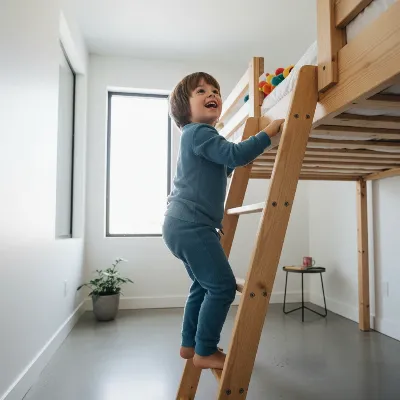 A young child, around 7 years old, confidently climbing the sturdy wooden ladder of a bunk bed in a brightly lit, modern bedroom
Essential Safety Features for Any Bunk Bed
Beyond age and individual readiness, the design and construction of the bunk bed itself play a pivotal role in ensuring safety. When selecting a bunk bed, look for specific features that comply with safety standards and minimize risks.
First and foremost, the bunk bed should have a robust and sturdy frame, with all attachments securely fastened to prevent wobbling or instability. Guardrails are non-negotiable for the top bunk; they must be present on all four sides, with the exception of the side positioned against a wall. These guardrails should extend at least 5 inches above the mattress surface to prevent children from rolling off, and the gaps between guardrail slats should be less than 3.5 inches to prevent head entrapment. The ladder or stairs should be firmly attached to the bed, easy to grip, and feature wide, evenly spaced rungs or steps to facilitate safe climbing and descent. Consider bunk beds with angled ladders or built-in staircases, which can offer greater stability and ease of use, especially for children just reaching the recommended age. Lastly, ensure you use the correct mattress size to avoid dangerous gaps and maintain the effectiveness of the guardrails. Proper placement of the bunk bed is also important, keeping it away from windows, ceiling fans, and other potential hazards.
Smart Usage and Maintenance Tips for Bunk Bed Safety
Once you’ve chosen a safe bunk bed and determined your child’s readiness, establishing clear rules and performing regular maintenance are key to long-term safety.
Usage Rules:
- No Playing or Jumping: Strictly enforce a rule against playing, jumping, or roughhousing on the bunk bed, particularly on the top bunk. This is the leading cause of bunk bed injuries.
- One at a Time on Ladder: Teach children to use the ladder one person at a time.
- Nighttime Safety: Install a nightlight near the ladder to illuminate the path for nighttime bathroom trips, reducing the risk of falls in the dark.
- No Hanging Items: Never allow children to hang belts, scarves, ropes, or other items from the guardrails or any part of the bunk bed, as this poses a serious strangulation hazard.
Maintenance Tips:
- Regular Inspections: Periodically check all bolts, screws, and fasteners to ensure they remain tight and secure. Loose hardware can compromise the bed’s stability.
- Cleanliness: Keep the bunk bed area tidy and free from clutter that could cause trips or falls.
- Mattress Integrity: Ensure the mattress remains firm and correctly positioned within the frame.
By consistently applying these usage rules and maintenance practices, you can significantly enhance the safety of your child’s bunk bed and foster responsible habits.
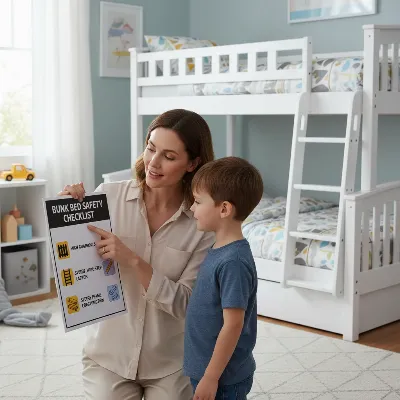 A parent points to a bunk bed safety checklist with a child, showing features like guardrails and sturdy ladder
Conclusion
Choosing the right age for children to sleep in bunk beds is a decision that blends standard safety guidelines with a careful assessment of your child’s individual development. While the recommendation for the top bunk is six years and older due to critical developmental factors, the lower bunk can often be safely utilized by children as young as two to four, provided adequate safety measures are in place. By prioritizing robust safety features in the bed’s design, establishing clear usage rules, and performing regular maintenance checks, parents can create a secure and enjoyable sleeping environment. Understanding your child’s unique maturity and physical capabilities is paramount, ensuring their bunk bed experience is both fun and safe.
What steps will you take to evaluate your child’s readiness for a bunk bed?
Frequently Asked Questions
What is the recommended age for a child to sleep on the top bunk?
The U.S. Consumer Product Safety Commission (CPSC) and UK safety standards (BS EN 747-1:2024) consistently recommend a minimum age of six years old for the top bunk. Children under this age typically lack the necessary coordination, balance, and impulse control for safe navigation and adherence to safety rules in an elevated sleeping space.
Can younger children safely use the bottom bunk of a bunk bed?
Yes, younger children can safely use the bottom bunk of a bunk bed. Many experts suggest that children as young as two to four years old can safely use the lower bunk, as its proximity to the floor minimizes fall risks. It is advisable to ensure the bottom bunk has protective features like low-profile designs and guardrails for added security.
How do I know if my child is ready for a bunk bed, beyond their age?
Beyond age, assess your child's individual readiness by observing their physical coordination, maturity, and ability to understand and consistently follow rules. Look for confidence in climbing ladders independently and a good understanding of safety instructions. Children who are active sleepers or sleepwalkers might not be suitable candidates due to increased fall risks.
What are the most important safety features to look for in a bunk bed?
Essential safety features include a robust and sturdy frame, securely fastened guardrails on all exposed sides of the top bunk extending at least 5 inches above the mattress, and gaps between guardrail slats less than 3.5 inches. The ladder or stairs should be firmly attached, easy to grip, and have wide, evenly spaced rungs or steps for safe climbing.
What are some key usage rules for ensuring bunk bed safety?
Key usage rules for bunk bed safety include strictly enforcing no playing, jumping, or roughhousing on the bed, especially the top bunk. Teach children to use the ladder one person at a time, install a nightlight near the ladder for nighttime safety, and never allow items like belts or scarves to hang from guardrails due to strangulation hazards.
Get our weekly buyer guide
Practical specs, not advice. Unsubscribe anytime.

We just got a bunk bed for our twin boys, and this was so helpful. I was really worried about the top bunk, but knowing the CPSC recommends age six gave me a lot of peace of mind. Our older son is seven, so he’s perfect for the top, and his younger brother is happy on the bottom. It’s made bedtime so much smoother!
I found the info about the UK safety standards (BS EN 747-1:2024) interesting, but I wish there was more on specific brands that meet these standards. It’s hard to know which bunk beds are truly safe just from the age guidelines. My daughter is five and really wants the top bunk, so I’m still a bit on the fence about what to buy.
This was exactly what I needed! My son just turned six and has been begging for a bunk bed. I was hesitant, but understanding the developmental science behind the age recommendation for the top bunk made me feel much better. We’re going to go ahead and get one for his room next week.
Good info here. We’ve been debating a bunk bed for our two girls, and I appreciate the breakdown of why the age six recommendation for the top bunk is so important. It’s not just about physical ability, but the cognitive skills too. I’m glad I read this before making a purchase, it really helped us think through the readiness factor.