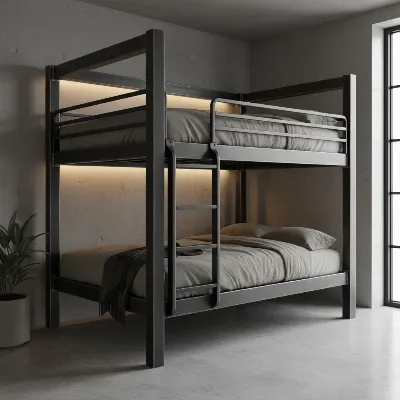
Bunk beds offer an ingenious solution for maximizing space in shared bedrooms or smaller living areas, creating a playful and practical environment. However, when toddlers are part of the household, these elevated sleeping arrangements introduce a unique set of safety considerations. Ensuring a bunk bed is safe for your little one is paramount, as injuries from falls or entrapment can be severe. This guide provides comprehensive strategies, from understanding age-appropriate use to implementing physical modifications and establishing crucial household rules, helping you create a secure sleeping space for your entire family.
The Benefits and Challenges of Bunk Beds for Toddlers
Bunk beds are incredibly efficient at saving floor space, allowing for more play area in a child’s room or accommodating multiple sleepers in a compact footprint. They can also instill a sense of adventure and independence in older children. For families with toddlers, the lower bunk often serves as a practical option, offering a familiar sleeping arrangement closer to the ground. However, the presence of a bunk bed, especially one with an accessible top bunk, introduces significant safety challenges for toddlers. Their developing motor skills, limited spatial awareness, and nascent understanding of danger make them particularly vulnerable to falls and entrapment hazards. The U.S. Consumer Product Safety Commission (CPSC) strongly advises against children under six sleeping in the top bunk due to these inherent risks, with thousands of bunk bed-related injuries reported annually, many involving younger children.
Understanding Bunk Bed Types and Toddler Safety
Bunk beds come in various configurations, each with implications for toddler safety. Traditional twin-over-twin designs are common, while twin-over-full or full-over-full beds offer more sleeping space. Loft beds, which feature a bed elevated above a desk or play area, are essentially a top bunk without a bottom one. While the bottom bunk can be suitable for toddlers as young as two or three years old, provided it has appropriate safety rails, the critical distinction lies with the top bunk. Regardless of the type, the core principle remains: the top bunk is designed for children aged six and above. When selecting or assessing a bunk bed, prioritize designs with robust construction and those that adhere to current safety standards, as these foundations are essential for any subsequent toddler-proofing efforts.
Material Matters: Bunk Bed Construction and Toddler Safety
The material and construction of a bunk bed significantly influence its overall safety and durability, particularly when considering the energetic nature of toddlers. Wooden bunk beds are often praised for their aesthetic appeal and sturdiness, offering a warm and classic look. When choosing wood, ensure it is smooth, free from splinters, and treated with non-toxic finishes. Metal bunk beds, on the other hand, are typically more budget-friendly and can be easier to clean. However, some metal designs might have sharp edges or smaller gaps that could pose a risk if not properly manufactured. Plastic bunk beds are lighter and sometimes more playful in design, but generally offer less durability and stability compared to wood or metal, making them a less ideal choice for long-term safety, especially with active children.
| Feature / Material | Wooden Bunk Beds | Metal Bunk Beds | Plastic Bunk Beds |
|---|---|---|---|
| Durability | High (with proper care) | High | Moderate |
| Stability | Excellent | Excellent (when well-constructed) | Moderate |
| Aesthetics | High (classic, versatile) | Moderate (modern, industrial) | Low (often perceived as less premium) |
| Safety Concerns | Splinters, chipping paint (if not non-toxic) | Sharp edges, finger entrapment in some designs | Less sturdy, potential for breakage, lower weight capacity |
| Maintenance | Wipe clean, occasional polishing | Wipe clean, check for rust | Easy to wipe clean |
“Selecting a bunk bed material isn’t just about style; it’s fundamentally about structural integrity and avoiding hidden hazards for young children,” explains Sarah Miller, a child safety expert. “Smooth finishes, rounded edges, and robust joints are non-negotiable, especially in a home with curious toddlers.”
Key Safety Features Checklist for Bunk Beds
Ensuring a bunk bed is safe for toddlers involves a multi-faceted approach, focusing on its design, installation, and daily use. A thorough safety checklist can help parents identify potential risks and implement the necessary precautions. This list goes beyond basic assembly, delving into the specifics that prevent common bunk bed injuries.
- Guardrails: The top bunk must feature guardrails on all four sides, or on the three exposed sides if one side is flush against a wall. The wall-side guardrail must be continuous. These rails should extend at least 5 inches above the top of the mattress to prevent roll-offs.
- Gap Spacing: Crucially, any gaps in the guardrails or within the bed frame itself should be no wider than 3.5 inches. This critical measurement prevents a child’s head or torso from becoming entrapped, a leading cause of severe bunk bed injuries.
- Ladder Security: The ladder must be securely attached to the bed frame and sturdy enough to support an adult’s weight without wobbling. Flat, wide steps are generally safer and more comfortable for climbing than round rungs.
- Mattress Fit: The mattress should fit snugly within the bunk bed frame, leaving no gaps larger than 3.5 inches between the mattress and the frame. Using a mattress that is too thin will reduce the effective height of the guardrails, while one that is too thick can create an unsafe space below the top bunk.
- Structural Integrity: The entire bunk bed structure should be solid and free from any shaking or instability. Regularly inspect all bolts, screws, and joints to ensure they are tight and secure.
- No Protrusions: Check for any decorative elements, bolts, or parts that protrude more than 5mm from the bed frame. These can snag clothing and pose a strangulation risk for children.
A Comprehensive Guide to Making Your Bunk Bed Safer for Toddlers
Making a bunk bed safer for toddlers requires proactive measures beyond just purchasing a “safe” model. It involves strategic setup, adherence to age guidelines, and regular vigilance. By implementing these steps, you can significantly reduce the risk of accidents.
Age-Appropriate Use is Non-Negotiable
|
Our Picks for the Best Bunk Bed in 2026
As an Amazon Associate I earn from qualifying purchases.
|
||
| Num | Product | Action |
|---|---|---|
| 1 | Disney Princess Loft Bed Tent - Curtain Set for Low Twin Loft Bed (Bed Sold Separately) by Delta Children |

|
| 2 | Twin Over Twin Metal Bunk Bed with LED Lights, USB Charging Station, 2 Drawers, Guard Rails & Ladder – No Box Spring Needed, Easy Assembly, White |
|
| 3 | Spider-Man Loft Bed Tent - Curtain Set for Low Twin Loft Bed (Bed Sold Separately) by Delta Children |
|
| 4 | DICTAC Twin Over Twin Bunk Bed with 8 Storage Drawers and Led Lights Metal Bunk Beds with Storage Headboard and Charging Station,L-Shaped bunk Bed for Kids/Teen with Safety Guardrail and Ladder,Black |
|
| 5 | Students Dorm Bunk Bed Curtain Home Privacy Bed Shading Curtain Net Bed Cloth Dustproof Blackout Bed Canopy Bedding Curtain Students Dormitory Tent Lightproof Cloth Bedding Canopy Spread Curtain |
|
| 6 | Breling Bunk Bed Privacy Curtains 3 Panel Play Curtain Set for Low Bunk Loft Bed with Felt Flag Double-Layer Gauze Playhouse Accessories with Tote Bags for Boy Girl Birthday Party Gift |
|
| 7 | FDW | 6 Inch Twin Mattress | Medium Firm | Gel Memory Foam Mattress | White | Bed in a Box, CertiPUR-US Certified | Pressure Relief, Cooling Ventilated Foam | Washable Removable Cover |
|
| 8 | Zinus Narrow Twin Mattress (30” Wide x 75” Long), 6 Inch Foam & Spring Hybrid Mattress for Bunk Beds, Trundles, RVs & Compact Spaces, Medium Firm Feel, CertiPUR-US Certified |
|
| 9 | Delta Children Twin Loft Bed with Guardrail and Ladder + Tent (Bundle), White/Disney Princess |
|
| 10 | VIAGDO Low Loft Bed Twin Size with 9 Storage Drawers and LED Lights, Metal Twin Loft Bed with Stairway Shelf Storage, Low Loft Bed with Safety Guardrail and Under-Bed Hideaway for Kids, White |
|
The most crucial safety guideline is to strictly enforce age recommendations. Children under the age of six should never sleep in or play on the top bunk. Their balance, coordination, and judgment are simply not developed enough to safely navigate heights and ladders. For toddlers, the bottom bunk is generally safe, especially if it’s a low-profile design and features its own guardrails to prevent accidental falls during sleep. If separating a convertible bunk bed into two single beds, always remove the top bunk’s guardrails when it’s used as a lower bed for a toddler, as they can become an entrapment hazard.
Ensuring Secure and Compliant Guardrails
Guardrails are the primary defense against falls from the top bunk. They must be present on all four sides of the upper bunk, even if one side is placed against a wall, with the wall-side rail being continuous from end to end to prevent entrapment between the bed and the wall. The guardrails need to extend at least 5 inches above the top of the mattress, ensuring adequate protection against rolling off. Periodically check that all guardrails are securely attached and cannot be removed without intentional effort, such as releasing a specific fastening device or applying force in multiple directions.
Prioritizing Ladder Safety
The ladder is often the most frequently used, and therefore potentially hazardous, component of a bunk bed. Ensure the ladder is robust, securely affixed to the bunk bed, and features wide, flat steps for easier climbing. Teach children the importance of using the ladder slowly and carefully, one step at a time, and reinforce that it is strictly for climbing up and down, not for playing. Consider installing a nightlight near the ladder to improve visibility for nighttime trips, further reducing the risk of missteps.
Strategic Placement in the Room
Where you position the bunk bed in the room plays a vital role in toddler safety. Ideally, place the bunk bed in a corner, so two sides are against walls, minimizing the number of exposed sides from which a child could fall. Keep the bunk bed away from windows to prevent access to blind or curtain cords, which pose a serious strangulation hazard. Similarly, ensure there is ample clearance from ceiling fans, light fixtures, and other furniture that a toddler might be tempted to climb onto or that could cause collisions.
Eliminating Entrapment and Snagging Hazards
Toddlers are curious and can squeeze into surprisingly small spaces, making entrapment prevention critical. Regularly inspect the bunk bed for any gaps larger than 3.5 inches, particularly between the mattress and the bed frame, and within the guardrail slats. Address any such gaps immediately with fillers or by ensuring the correct mattress size is used. Furthermore, check for any protruding elements like decorative knobs or exposed bolts. These can snag clothing, leading to strangulation or other injuries, so ensure all hardware is recessed and smooth.
Regular Inspections and Maintenance
Even the safest bunk bed can become hazardous over time if not properly maintained. Make it a routine to inspect the bunk bed periodically. Check all bolts, screws, and fasteners to ensure they are tight and secure. Look for any signs of wear and tear, such as cracks in the wood, bending in metal components, or loose joints. Any damage should be repaired immediately using replacement parts from the original manufacturer to maintain structural integrity and safety standards.
Daily Safety Practices and Maintenance for Toddler Bunk Beds
Beyond the initial setup and modifications, establishing clear rules and maintaining the bunk bed are continuous efforts to ensure toddler safety. Consistent reinforcement of these practices will help prevent accidents.
- No Horseplay Rule: Strictly prohibit jumping, roughhousing, or any form of play on the bunk bed. Falls while playing account for a significant number of bunk bed injuries, especially from the top bunk.
- One Child at a Time: Emphasize that only one child should be on the top bunk at any given time to avoid overloading the structure or causing falls.
- Keep Ladder Clear: Ensure the ladder is always clear of toys, clothes, or any obstructions that could cause a child to trip.
- Avoid Attaching Items: Never allow children to tie ropes, scarves, belts, or other items to any part of the bunk bed, as these can create strangulation hazards.
- Routine Cleaning: Regularly clean the bunk bed frame to prevent dust and grime buildup. For wooden beds, use a damp cloth and mild cleaner; for metal, a general surface cleaner is sufficient. Avoid harsh chemicals that could damage finishes or pose a risk to children.
- Tighten Fasteners: Make it a habit to check and tighten all bolts, screws, and connections every few months. A loose joint can compromise the bed’s stability and lead to a collapse or fall.
“Safety around bunk beds for toddlers isn’t a one-time fix; it’s an ongoing commitment,” notes Dr. Emily Chen, a pediatric safety specialist. “Parents must be proactive in setting boundaries and performing regular checks to keep their little ones safe.”
Essential Safety Accessories for Bunk Beds: A Price Guide
Investing in the right safety accessories can further enhance the security of bunk beds, especially in homes with toddlers. These additions provide extra layers of protection against falls and entrapment.
| Accessory Type | Description | Price Range (USD) |
|---|---|---|
| Additional Bed Rails | Extend or reinforce existing guardrails, or add to lower bunk | $30 – $100 |
| Ladder Safety Gates/Covers | Prevent toddlers from climbing the ladder | $20 – $70 |
| Anti-Tip Kits | Secure the bunk bed to the wall for added stability | $10 – $30 |
| Mattress Gap Fillers | Close small gaps between mattress and frame | $15 – $40 |
| Bunk Bed Safety Netting | Creates a secure enclosure around the top bunk | $50 – $150 |
| Non-Slip Ladder Treads | Improve grip on ladder rungs | $10 – $30 |
| Corner Protectors/Padding | Soften sharp edges on posts or frames | $10 – $25 |
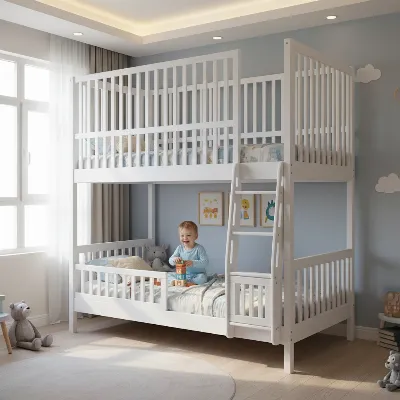 A child-safe bunk bed with robust guardrails, a secure ladder, and soft bedding, illustrating safety features.
Conclusion
Creating a safe bunk bed environment for toddlers at home demands careful consideration and consistent effort. By adhering to age guidelines, reinforcing guardrails, securing ladders, and strategically placing the bed, you can significantly mitigate the inherent risks. Regular maintenance, combined with strict household rules against horseplay and climbing, forms the bedrock of a secure sleeping space. While bunk beds offer undeniable benefits for space-saving and fun, the ultimate priority must always be the well-being of your little ones. Your diligence in implementing these safety measures ensures that a bunk bed remains a cherished part of your home, not a source of worry. What steps will you take today to make your bunk bed safer for the toddlers in your life?
Frequently Asked Questions
What is the recommended age for a child to sleep in the top bunk of a bunk bed?
The U.S. Consumer Product Safety Commission (CPSC) and many other safety organizations recommend that children should be at least six years old before sleeping in the top bunk. This is due to younger children’s underdeveloped coordination, balance, and spatial awareness, which increases their risk of falls and serious injury.
Can a toddler safely sleep in the bottom bunk of a bunk bed?
Yes, a toddler can generally sleep safely in the bottom bunk of a bunk bed. It functions much like a regular low bed. However, it is advisable to ensure the bottom bunk also has appropriate guardrails or a bed rail to prevent accidental rolling out, especially if the toddler is active during sleep.
How high should bunk bed guardrails be to be considered safe?
Guardrails on the top bunk should extend at least 5 inches (130mm) above the top surface of the mattress to effectively prevent a child from rolling off. It is also crucial that these guardrails are present on all four sides of the top bunk (or three sides if one is against a wall) and securely attached.
What kind of gaps in a bunk bed are dangerous for toddlers?
Any gaps in the bunk bed structure, including between the mattress and the frame, or between guardrail slats, should not exceed 3.5 inches (89mm). Larger gaps pose a serious entrapment hazard where a child’s head or torso could become caught, leading to potential strangulation or injury.
How can I prevent a toddler from climbing the bunk bed ladder?
To prevent a toddler from climbing the ladder, consider installing a safety gate specifically designed for bunk bed ladders or a removable ladder cover when not in use. Teaching strict rules about ladder use and consistent supervision are also key deterrents.
Are older bunk beds still safe for toddlers?
Older bunk beds might not meet current safety standards, especially regarding guardrail height, gap spacing, and overall structural integrity. If you have an older Bunk Bed, thoroughly inspect it for compliance with modern safety guidelines and consider retrofitting it with updated safety features or replacing it with a certified model.