Bunk beds with integrated desks are an excellent space-saving solution for teenagers, offering a dedicated area for studying, relaxing, and sleeping within limited room footprints. These multi-functional furniture pieces maximize a teen’s room by combining a bed and a workspace, making them ideal for smaller bedrooms or shared spaces. This guide details various types, materials, and essential considerations for choosing the best bunk bed with a desk for your teenager’s evolving needs.
Advantages and Disadvantages of Bunk Beds
Bunk beds, especially those with integrated desks, have evolved into sophisticated, space-optimizing furniture. Their popularity stems from their ability to serve multiple purposes within a compact footprint.
Advantages: For compare top bunk beds on this site.
- Space-Saving: Bunk beds free up valuable floor space, making them ideal for smaller bedrooms. By stacking sleeping areas, they allow for other furniture like desks or storage units to be incorporated without feeling cramped.
- Cost-Effective: Investing in a single bunk bed with a desk is often more economical than purchasing a separate bed, desk, and bookshelf, offering significant value.
- Flexibility and Functionality: Many modern designs are versatile, featuring convertible elements or modular components that adapt as a teenager’s needs change. They often include built-in shelving, drawers, or pull-out beds.
- Dedicated Workspace: An integrated desk provides a clear, designated area for homework, creative projects, or gaming, helping teenagers focus and maintain organization.
- Creates a Personal Zone: For shared rooms, bunk beds offer a sense of personal territory, and for single users, the elevated bed creates a cozy, private retreat above the study area.
Disadvantages:
- Safety Concerns: The primary concern is the risk of falls from the top bunk, necessitating robust guardrails, sturdy ladders or stairs, and adherence to weight limits.
- Limited Privacy: While offering individual sleeping spots, the overall design can still feel less private than two separate rooms or beds, especially in close quarters.
- Difficulty with Bedding: Changing sheets and making the bed on the top bunk can be challenging due to its height and accessibility.
- Ceiling Height: Rooms with low ceilings may not be suitable for taller bunk bed designs, as it can feel claustrophobic for the top bunk occupant.
- Assembly: Due to their complex, multi-functional nature, bunk beds with desks can often be more intricate to assemble than standard beds.
Popular Types of Bunk Beds with Desks
The market for bunk beds with desks includes diverse styles and configurations, catering to various room sizes and functional requirements. Each type offers unique features designed to enhance a teenager’s living and study environment.
- Traditional Bunk Bed with Desk: These classic designs feature two beds stacked vertically, with a desk often integrated into the frame at the lower level or as a pull-out option. They maximize sleeping capacity.
- Loft Bed with Desk: This is a common and practical type for teenagers. A single bed is elevated, creating a large, open space underneath perfectly suited for a spacious built-in desk, shelving, and sometimes additional seating or storage.
- L-Shaped Bunk Bed with Desk: In this configuration, the top bunk is positioned perpendicular to the bottom bunk, creating an L-shape. The space beneath the top bunk is often utilized for a desk and storage, offering a more open feel and better desk ergonomics.
- Bunk Bed with Integrated Wardrobe and Desk: These highly functional units combine sleeping, studying, and clothing storage into a single piece of furniture. They are ideal for extremely small rooms, featuring closets, drawers, and desks seamlessly integrated.
- Convertible and Modular Bunk Beds: Designed for adaptability, these beds can often be separated into two stand-alone single beds or reconfigured to change the desk layout. This offers longevity, allowing the furniture to evolve with your teen’s needs.
- Themed Bunk Beds for Younger Teens: Some designs for younger teenagers incorporate playful themes or unique structures, often with smaller integrated desks suitable for arts and crafts or light homework.
- Heavy-Duty Bunk Beds for Adults/Older Teens: For older teenagers or young adults, there are more robust, minimalist designs that prioritize strength and stability, often with larger, more ergonomic desk spaces.
Comparing Bunk Bed Materials
|
Our Picks for the Best Bunk Bed in 2026
As an Amazon Associate I earn from qualifying purchases.
|
||
| Num | Product | Action |
|---|---|---|
| 1 | Delta Children Twin Loft Bed with Guardrail and Ladder + Tent (Bundle), White/Disney Princess |

|
| 2 | Zinus Narrow Twin Mattress (30” Wide x 75” Long), 6 Inch Foam & Spring Hybrid Mattress for Bunk Beds, Trundles, RVs & Compact Spaces, Medium Firm Feel, CertiPUR-US Certified |
|
| 3 | FDW | 6 Inch Twin Mattress | Medium Firm | Gel Memory Foam Mattress | White | Bed in a Box, CertiPUR-US Certified | Pressure Relief, Cooling Ventilated Foam | Washable Removable Cover |
|
| 4 | Breling Bunk Bed Privacy Curtains 3 Panel Play Curtain Set for Low Bunk Loft Bed with Felt Flag Double-Layer Gauze Playhouse Accessories with Tote Bags for Boy Girl Birthday Party Gift |
|
| 5 | Twin Over Twin Metal Bunk Bed with LED Lights, USB Charging Station, 2 Drawers, Guard Rails & Ladder – No Box Spring Needed, Easy Assembly, White |
|
| 6 | VIAGDO Low Loft Bed Twin Size with 9 Storage Drawers and LED Lights, Metal Twin Loft Bed with Stairway Shelf Storage, Low Loft Bed with Safety Guardrail and Under-Bed Hideaway for Kids, White |
|
| 7 | Students Dorm Bunk Bed Curtain Home Privacy Bed Shading Curtain Net Bed Cloth Dustproof Blackout Bed Canopy Bedding Curtain Students Dormitory Tent Lightproof Cloth Bedding Canopy Spread Curtain |
|
| 8 | DICTAC Twin Over Twin Bunk Bed with 8 Storage Drawers and Led Lights Metal Bunk Beds with Storage Headboard and Charging Station,L-Shaped bunk Bed for Kids/Teen with Safety Guardrail and Ladder,Black |
|
| 9 | Disney Princess Loft Bed Tent - Curtain Set for Low Twin Loft Bed (Bed Sold Separately) by Delta Children |
|
| 10 | Spider-Man Loft Bed Tent - Curtain Set for Low Twin Loft Bed (Bed Sold Separately) by Delta Children |
|
The choice of material significantly impacts a bunk bed’s durability, aesthetics, safety, and price. Understanding the characteristics of each common material is crucial for making an informed decision.
- Wooden Bunk Beds:
- Advantages: Known for exceptional durability, timeless aesthetic appeal, and the warm atmosphere they create. Wood offers a wide range of finishes and styles. Solid wood, like pine or oak, is robust and safe.
- Disadvantages: Generally higher in price. They can be heavy, making rearrangement difficult. Wood can be susceptible to scratches, dents, or, if not properly treated, pests.
- Metal Bunk Beds:
- Advantages: Highly durable and sturdy, metal frames are known for their strength and resistance to damage. They often have a sleek, modern look, are easy to clean, and are typically more affordable than solid wood.
- Disadvantages: Can sometimes be less aesthetically versatile than wood. Metal frames can be prone to squeaking if not assembled tightly. Rust can be an issue if the protective coating is compromised.
- Plastic Bunk Beds:
- Advantages: Lightweight, making them easy to move and assemble. Plastic is resistant to water and can come in a variety of bright colors, often appealing to younger children. They are typically the most budget-friendly option.
- Disadvantages: Significantly less durable and sturdy than wood or metal. They are generally not recommended for older teenagers due to lower weight capacity and structural integrity concerns. Plastic can become brittle over time.
Bunk Bed Material Comparison Table
| Feature | Wooden Bunk Beds | Metal Bunk Beds | Plastic Bunk Beds |
|---|---|---|---|
| Durability | High | High | Medium |
| Price | High | Medium | Low |
| Aesthetics | High | Medium | Low |
| Safety (Structural) | High | High | Medium |
| Ease of Cleaning | Medium | High | High |
| Weight Capacity | High | High | Medium |
Essential Guide to Choosing a Bunk Bed with a Desk
Selecting the right bunk bed with an integrated desk requires careful consideration of several factors to ensure it meets your teenager’s needs, fits the room space, and adheres to safety standards.
- Determine Usage Needs:
- Who will use the bed? Is it for a single teenager, or will it be shared? This impacts bed size and weight capacity.
- What is the primary purpose? Is the desk for intensive studying, casual use, or gaming? This dictates the desk’s size and features.
- What is the room size? Measure your bedroom dimensions, including ceiling height, to ensure the bunk bed fits comfortably without obstructing movement or feeling cramped.
- Select Appropriate Material:
- Wood: Choose for longevity, a classic look, and superior stability. Ideal for a durable investment.
- Metal: Opt for a sleek, modern aesthetic and robust strength at a more budget-friendly price point.
- For teenagers, avoid plastic as the primary structural material due to its limited durability and safety for heavier use.
- Prioritize Safety Features:
- Sturdy Frame: The bunk bed should feel solid and not wobble or creak. Check for robust construction and secure connections.
- Guardrails: Ensure the top bunk has high and continuous guardrails on all open sides to prevent falls.
- Ladder/Stairs: Ladders should have wide, non-slip rungs and be securely attached. Stairs with handrails offer easier and safer access, especially for younger teens.
- Weight Capacity: Verify that the bed’s weight limit comfortably supports your teenager and any potential guests.
- Choose the Right Size:
- Ceiling Height: Allow at least 2 feet (60 cm) between the top mattress and the ceiling for comfortable sitting up.
- Bed Dimensions: Ensure the mattress size is appropriate for your teenager’s height and provides enough room to sleep comfortably.
- Desk Dimensions: Consider the workspace needed. A larger desk is better for students with computers, books, and other supplies.
- Reputable Supplier and Warranty:
- Choose a supplier with a strong reputation for quality and safety.
- Look for clear warranty policies that cover manufacturing defects.
- A good supplier will offer a variety of models and knowledgeable staff to assist with your decision.
Tips for Using and Maintaining Bunk Beds
Proper usage and regular maintenance are key to ensuring the longevity and safety of your bunk bed with a desk, especially for active teenagers.
- Safe Usage Practices:
- Always adhere to the manufacturer’s recommended weight limits for both bunks.
- Discourage roughhousing, jumping, or excessive climbing on the bed structure.
- Ensure the top bunk is used only by older, more responsible children or teenagers.
- Periodically check all bolts, screws, and connections to ensure they are tight and secure.
- Never use a mattress that is too thick for the top bunk, as it can reduce the effective height of the guardrails.
- Effective Maintenance:
- Regularly clean the frame with a damp cloth to remove dust and dirt. For wooden frames, use appropriate wood cleaner; for metal, a mild detergent solution is sufficient.
- Avoid exposing wooden frames to direct sunlight or excessive moisture, which can cause warping or damage.
- Inspect the ladder or stairs for any signs of wear or damage and repair promptly.
- For metal frames, occasionally check for any signs of rust and address them with appropriate rust-inhibiting treatments if necessary.
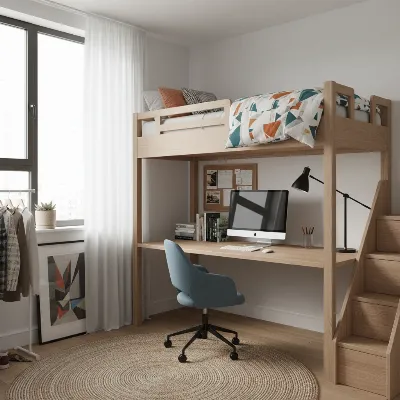 A modern wooden bunk bed with an integrated desk, tailored for a teenager's room, featuring clean lines, a comfortable mattress, and organized study space below.
Approximate Price Guide for Bunk Beds with Desks
The cost of a bunk bed with a desk can vary significantly based on material, brand, design complexity, and additional features. Here’s an estimated price range in USD for common types:
| Bunk Bed Type with Desk | Estimated Price Range (USD) |
|---|---|
| Solid Pine Wood Bunk Bed | $400 – $800 |
| Engineered Wood Bunk Bed | $300 – $600 |
| Metal Frame Bunk Bed | $250 – $550 |
| High-End Solid Wood Bunk Bed | $800 – $1,500+ |
| Multi-Functional (Storage/Wardrobe) | $600 – $1,200 |
Prices are approximate and can fluctuate based on retailer, sales, and specific design features. It’s always advisable to compare options from various reputable furniture stores.
Conclusion
Choosing the ideal bunk bed with a desk for your teenager is an investment in their comfort, productivity, and the efficient use of space. By carefully considering the advantages, different types, material options, and following a comprehensive buying guide, you can find a solution that not only meets their current needs but also adapts to their future. Prioritize safety, durability, and functionality, ensuring that this significant piece of furniture becomes a cherished part of their room. As spaces become more compact, smart furniture solutions like these truly transform how teenagers live and learn.
Frequently Asked Questions
What are the key safety features to look for in a bunk bed with a desk for a teenager?
For optimal safety, prioritize bunk beds with a robust and stable frame, high guardrails on all open sides of the top bunk, and a secure, easy-to-climb ladder or staircase with non-slip treads. Ensure the mattress thickness does not reduce the effective height of the guardrails below safety standards, and always check the manufacturer’s weight capacity.
Can a bunk bed with a desk be a good option for a small apartment?
Absolutely. A bunk bed with an integrated desk is an excellent space-saving solution for small apartments or compact bedrooms. By combining a bed and a study area vertically, it maximizes floor space, allowing for more room to move, play, or add other small furniture pieces, making the room feel more open and functional.
How do I ensure the bunk bed’s desk is ergonomic for my teenager’s study habits?
To ensure ergonomic comfort, look for a desk with sufficient surface area for study materials and a computer, and ideally, an adjustable height feature or enough clearance to accommodate an ergonomic chair. Consider built-in shelving or drawers for organization to keep the workspace tidy, promoting better focus and posture during study sessions.
Frequently Asked Questions
What are the key safety features to look for in a bunk bed with a desk for a teenager?
For optimal safety, prioritize bunk beds with a robust and stable frame, high guardrails on all open sides of the top bunk, and a secure, easy-to-climb ladder or staircase with non-slip treads. Ensure the mattress thickness does not reduce the effective height of the guardrails below safety standards, and always check the manufacturer's weight capacity.
Can a bunk bed with a desk be a good option for a small apartment?
Absolutely. A bunk bed with an integrated desk is an excellent space-saving solution for small apartments or compact bedrooms. By combining a bed and a study area vertically, it maximizes floor space, allowing for more room to move, play, or add other small furniture pieces, making the room feel more open and functional.
How do I ensure the bunk bed's desk is ergonomic for my teenager's study habits?
To ensure ergonomic comfort, look for a desk with sufficient surface area for study materials and a computer, and ideally, an adjustable height feature or enough clearance to accommodate an ergonomic chair. Consider built-in shelving or drawers for organization to keep the workspace tidy, promoting better focus and posture during study sessions.
What are the main material options for bunk beds with desks?
The main material options are wood (solid pine, engineered wood), metal, and plastic. Wooden bunk beds offer durability and a classic aesthetic, while metal frames are sturdy and more affordable. Plastic is lightweight and budget-friendly but generally not recommended for older teenagers due to lower durability and weight capacity.
What is the approximate price range for a solid pine wood bunk bed with a desk?
A solid pine wood bunk bed with a desk typically ranges from $400 to $800 USD. Prices can vary based on brand, design complexity, and additional features, so it's advisable to compare options from various reputable furniture stores.
Choosing a Bunk Bed with a Desk for Teenagers
Selecting the right bunk bed with an integrated desk requires careful consideration of several factors to ensure it meets your teenager's needs, fits the room space, and adheres to safety standards.
Identify who will use the bed (single or shared) and the primary purpose of the desk (intensive studying, casual use, or gaming). Measure your bedroom dimensions, including ceiling height, to ensure the bunk bed fits comfortably without obstructing movement or feeling cramped.
Choose wood for longevity, a classic look, and superior stability, ideal for a durable investment. Opt for metal for a sleek, modern aesthetic and robust strength at a more budget-friendly price point. Avoid plastic as the primary structural material for teenagers due to its limited durability and safety for heavier use.
Ensure the bunk bed has a sturdy frame that doesn't wobble or creak, high and continuous guardrails on all open sides of the top bunk, and a secure ladder or stairs with wide, non-slip rungs. Verify that the bed's weight limit comfortably supports your teenager and any potential guests.
Allow at least 2 feet (60 cm) between the top mattress and the ceiling for comfortable sitting up. Ensure the mattress size is appropriate for your teenager's height. Consider the workspace needed; a larger desk is better for students with computers, books, and other supplies.
Choose a supplier with a strong reputation for quality and safety. Look for clear warranty policies that cover manufacturing defects. A good supplier will offer a variety of models and knowledgeable staff to assist with your decision.
Get our weekly buyer guide
Practical specs, not advice. Unsubscribe anytime.

I appreciate the breakdown of different materials. We went with a metal frame bunk bed with a desk, and it’s holding up well. My daughter loves having her own little study nook. My only minor complaint is that assembly took a bit longer than expected, but once it was up, it looked great and feels very secure.
The idea of a bunk bed with a desk is fantastic for maximizing space, especially in shared rooms. We got one for our twins, and while the desk area is great, the ladder rungs are a bit uncomfortable on the feet. It’s not a deal-breaker, but something to consider if your teen will be going up and down frequently. Otherwise, it’s a solid piece of furniture.
This was so helpful in narrowing down options for my daughter’s room. We ended up choosing one with a built-in bookshelf near the desk, which is perfect for her textbooks and art supplies. It’s amazing how much more organized her room looks now. The multi-functional aspect is truly a lifesaver for smaller spaces.
We just got the ‘Study Loft’ model for my son’s small room, and it’s been a game-changer! The integrated desk is perfect for his homework and gaming setup, and it really freed up so much floor space. The quality is solid, and it feels very sturdy, which was a big concern for us. Highly recommend for any teen with a compact bedroom.