For most standard bunk beds, a mattress thickness between 6 and 8 inches is widely recommended to ensure both safety and comfort. This range allows guardrails to remain effective, providing at least 5 inches of protective height above the mattress surface, as mandated by safety standards like those from the Consumer Product Safety Commission (CPSC). Selecting the correct thickness prevents falls and ensures adequate headroom for users.
The Critical Role of Bunk Bed Mattress Thickness
The thickness of a bunk bed mattress is a surprisingly crucial factor that directly influences safety, comfort, and the overall functionality of the bed. Unlike standard bed frames, bunk beds have specific design limitations, particularly concerning the top bunk, where guardrail height and headroom are paramount. Opting for an incorrect mattress thickness can lead to significant safety hazards or a compromised sleeping experience.
The primary concern with mattress thickness for bunk beds revolves around the guardrails. These protective barriers are designed to prevent sleepers, especially children, from accidentally rolling off the upper bunk during the night. If a mattress is too thick, it can reduce the effective height of the guardrail, rendering it less capable of containing the sleeper safely. Conversely, a mattress that is too thin might not provide adequate cushioning or support, leading to discomfort and restless nights. Achieving the perfect balance between robust support and strict safety compliance is essential for any bunk bed setup.
Safety Standards and Guardrail Requirements
Safety is non-negotiable when it comes to bunk beds, and mattress thickness plays a central role in meeting established safety standards. Regulatory bodies like the Consumer Product Safety Commission (CPSC) have clear guidelines to prevent falls and entrapment hazards. A key requirement is that the top of the guardrail must extend a minimum of 5 inches (approximately 13 cm) above the top surface of the mattress. This 5-inch safety margin is vital to create an effective barrier that prevents occupants from rolling off the bed during sleep.
Manufacturers design bunk beds with specific maximum mattress thickness recommendations, which are crucial to follow to ensure the guardrails maintain their protective height. To determine the maximum safe mattress thickness for your bunk, you can measure the distance from the mattress support base to the top of the guardrail, then subtract 5 inches. The resulting number is the thickest mattress you should use. Ignoring these guidelines can significantly increase the risk of falls and potentially serious injuries, making adherence to manufacturer instructions and safety standards paramount.
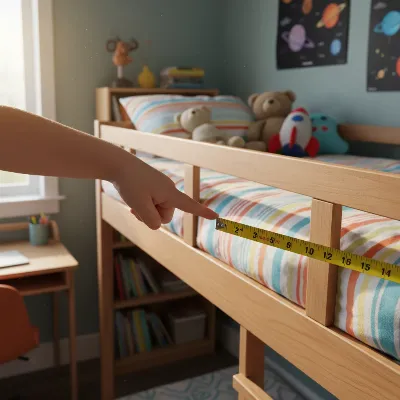 Child's hand pointing to bunk bed guardrail height above mattress, illustrating safety standard
Recommended Thickness for Different Bunks and Users
|
Our Picks for the Best Bunk Bed in 2026
As an Amazon Associate I earn from qualifying purchases.
|
||
| Num | Product | Action |
|---|---|---|
| 1 | Disney Princess Loft Bed Tent - Curtain Set for Low Twin Loft Bed (Bed Sold Separately) by Delta Children |

|
| 2 | FDW | 6 Inch Twin Mattress | Medium Firm | Gel Memory Foam Mattress | White | Bed in a Box, CertiPUR-US Certified | Pressure Relief, Cooling Ventilated Foam | Washable Removable Cover |
|
| 3 | Delta Children Twin Loft Bed with Guardrail and Ladder + Tent (Bundle), White/Disney Princess |
|
| 4 | Twin Over Twin Metal Bunk Bed with LED Lights, USB Charging Station, 2 Drawers, Guard Rails & Ladder – No Box Spring Needed, Easy Assembly, White |
|
| 5 | Spider-Man Loft Bed Tent - Curtain Set for Low Twin Loft Bed (Bed Sold Separately) by Delta Children |
|
| 6 | DICTAC Twin Over Twin Bunk Bed with 8 Storage Drawers and Led Lights Metal Bunk Beds with Storage Headboard and Charging Station,L-Shaped bunk Bed for Kids/Teen with Safety Guardrail and Ladder,Black |
|
| 7 | VIAGDO Low Loft Bed Twin Size with 9 Storage Drawers and LED Lights, Metal Twin Loft Bed with Stairway Shelf Storage, Low Loft Bed with Safety Guardrail and Under-Bed Hideaway for Kids, White |
|
| 8 | Breling Bunk Bed Privacy Curtains 3 Panel Play Curtain Set for Low Bunk Loft Bed with Felt Flag Double-Layer Gauze Playhouse Accessories with Tote Bags for Boy Girl Birthday Party Gift |
|
| 9 | Students Dorm Bunk Bed Curtain Home Privacy Bed Shading Curtain Net Bed Cloth Dustproof Blackout Bed Canopy Bedding Curtain Students Dormitory Tent Lightproof Cloth Bedding Canopy Spread Curtain |
|
| 10 | Zinus Narrow Twin Mattress (30” Wide x 75” Long), 6 Inch Foam & Spring Hybrid Mattress for Bunk Beds, Trundles, RVs & Compact Spaces, Medium Firm Feel, CertiPUR-US Certified |
|
The ideal mattress thickness for a bunk bed isn’t a one-size-fits-all answer, as it can vary based on whether it’s for the top or bottom bunk and the age and weight of the user. Generally, for most standard bunk beds, a mattress thickness between 6 and 8 inches is widely recommended. This range offers a sweet spot that provides sufficient comfort and support without compromising essential safety features or headroom.
For the top bunk, adhering strictly to the 6 to 8-inch thickness recommendation is especially important. This ensures that the guardrails remain high enough to prevent falls and that there’s adequate headroom for the sleeper to sit up comfortably without hitting their head on the ceiling or the bunk above. Some sources suggest a range of 5 to 8 inches for the top bunk to maintain proper rail clearance. Using a mattress thicker than 8 or 9 inches on the top bunk is generally not advisable, as it can negate the guardrails’ effectiveness.
The bottom bunk offers more flexibility. While a 6 to 8-inch mattress is perfectly suitable, you might be able to accommodate a slightly thicker mattress (e.g., up to 10-12 inches) if headroom to the upper bunk’s base allows for comfortable sitting. However, always consider the overall clearance and ensure it doesn’t make the lower bunk feel cramped.
When considering user age and weight, a 6-inch mattress is often sufficient and safe for younger children, providing necessary comfort without compromising guardrail safety. For teenagers or adults, a slightly thicker mattress, perhaps up to 8 inches, may offer enhanced comfort and support, provided it still adheres to the bunk bed’s maximum thickness guidelines and maintains the 5-inch guardrail clearance. Lighter mattresses, typically under 50 pounds, are also recommended for top bunks, aiding in easy bed making and ensuring structural integrity.
Exploring Mattress Materials for Bunk Beds
Beyond thickness, the material of your bunk bed mattress significantly impacts comfort, support, and durability. Several types of mattresses are suitable for bunk beds, each with its own set of advantages and considerations. Choosing the right material ensures a restful sleep while aligning with the practical constraints of a bunk bed.
Memory Foam Mattresses: These are popular for their ability to contour to the body, offering excellent pressure relief and personalized support. Memory foam can be a great choice for bunk beds, especially for older children or adults, as it minimizes motion transfer, so one sleeper’s movements won’t disturb another. However, ensure the memory foam mattress isn’t excessively thick to maintain guardrail safety. Some older memory foam models might retain heat, but newer versions often incorporate cooling technologies. Memory foam mattresses also tend to be heavier, which can make changing sheets on the top bunk more challenging.
Innerspring/Open Coil Mattresses: Often more affordable and lightweight, innerspring mattresses, particularly open coil designs, provide a traditional bouncy feel and good airflow. They can be a good option for younger children who might outgrow their mattress quickly. However, standard innerspring mattresses often require a box spring for optimal support, which is not practical for most bunk beds due to added height. Low-profile innerspring options that don’t need a box spring are better suited.
Pocket Sprung Mattresses: These mattresses feature individual springs encased in fabric pockets, allowing them to move independently. This design offers superior support, motion isolation, and breathability compared to open coil systems. Pocket sprung mattresses strike a good balance, making them suitable for both children and adults. However, they can be heavier and more expensive than open coil options.
Hybrid Mattresses: Combining layers of memory foam or latex with an innerspring coil system, hybrid mattresses aim to deliver the best of both worlds: the contouring comfort of foam and the robust support and breathability of springs. When considering a hybrid for a bunk bed, choose one that is not too thick and does not require a box spring to maintain safety and functionality.
Firmness: For growing bodies, a medium-firm to firm mattress is generally recommended. This level of firmness provides adequate support for proper spinal alignment, preventing sagging and ensuring a comfortable sleeping posture. A firmer mattress can also contribute to the overall stability of the bunk bed setup, especially on the top bunk.
Choosing Your Bunk Bed Mattress: A Practical Guide
Selecting the best mattress for your bunk bed involves a systematic approach, prioritizing safety, comfort, and the specific needs of the sleepers. Here’s a practical guide to help you make an informed decision:
- Determine Who Will Use the Bunk Bed: Consider the age and weight of the sleepers. Younger children might be perfectly comfortable and safe on a 6-inch mattress, while teenagers or adults may prefer up to 8 inches for enhanced comfort. If the bunk bed is primarily for younger kids, a medium-firm, low-profile option is often ideal.
- Check Manufacturer Specifications: Always consult your bunk bed’s manual for its maximum recommended mattress thickness. This is the most crucial step, as exceeding this limit will compromise the guardrail’s effectiveness and void warranties.
- Prioritize Safety Features: Ensure that your chosen mattress, when placed on the bunk bed, leaves at least 5 inches of guardrail height above its top surface. Measure this distance carefully before making a purchase. The frame itself should be sturdy, and guardrails should be securely attached and cover all open sides.
- Consider Mattress Material and Firmness:
- For comfort and motion isolation: Memory foam or pocket sprung are excellent choices, but be mindful of thickness and potential heat retention.
- For budget-friendliness and lightness: Look for low-profile innerspring or open coil options that don’t require a box spring.
- For balanced support: A hybrid mattress that meets thickness requirements can offer a great blend.
- For growing bodies: A medium-firm to firm mattress is generally recommended to support spinal alignment.
- Measure Accurately: Measure the inner dimensions of your bunk bed frame (length, width, and depth from mattress support to top of guardrail) to ensure a snug fit. A mattress that is too small can shift, creating gaps that pose an entrapment risk, while one that is too large won’t fit properly.
Tips for Longevity and Maintenance
Proper care and maintenance can significantly extend the life of your bunk bed mattresses and ensure they continue to provide a safe and comfortable sleeping experience. Regular attention to a few key areas will help preserve their quality and structural integrity over time.
Firstly, rotate your mattresses regularly, ideally every three to six months. This helps distribute wear evenly and prevents premature sagging, especially important for the often-used bottom bunk or specific sleeping spots. Secondly, keep your mattresses clean. Vacuuming them periodically can remove dust mites and allergens. For spills, spot-clean immediately with a mild detergent and water, allowing the area to dry completely to prevent mold or mildew growth. Consider using a waterproof mattress protector to guard against spills, stains, and allergens, a particularly wise investment for children’s bunk beds.
Regularly inspect the bunk bed frame itself. Check and tighten any loose screws or bolts, especially for the ladder and guardrails, to ensure maximum stability and safety. Avoid allowing children to jump or roughhouse on the top bunk, as this can strain the mattress and the bed frame. Finally, ensure good air circulation around the mattresses by periodically removing bedding and allowing them to air out, which helps prevent moisture buildup and keeps the mattresses fresh.
Selecting the best mattress for your bunk bed involves prioritizing safety, comfort, and the specific needs of the sleepers. Follow these steps to make an informed decision. Consider the age and weight of the sleepers. Younger children may be comfortable on a 6-inch mattress, while teenagers or adults might prefer up to 8 inches for enhanced comfort. A medium-firm, low-profile option is often ideal for younger kids. Always consult your bunk bed's manual for its maximum recommended mattress thickness. Exceeding this limit will compromise the guardrail's effectiveness and could void warranties, making this a crucial safety step. Ensure your chosen mattress, when placed on the bunk bed, leaves at least 5 inches of guardrail height above its top surface. Measure this distance carefully before purchasing to confirm compliance with safety standards. The bed frame and guardrails should also be sturdy and securely attached. Evaluate mattress materials like memory foam for comfort, innerspring for budget-friendliness, or hybrid for balanced support. For growing bodies, a medium-firm to firm mattress is generally recommended to support proper spinal alignment and prevent sagging. Be mindful of thickness and potential heat retention with certain materials. Measure the inner dimensions of your bunk bed frame (length, width, and depth from mattress support to top of guardrail) to ensure a snug fit. A mattress that is too small can shift, creating gaps that pose an entrapment risk, while one that is too large won't fit properly. Practical specs, not advice. Unsubscribe anytime.
Choosing Your Bunk Bed Mattress
Get our weekly buyer guide
