Choosing between bunk beds with stairs or ladders primarily depends on user age, available space, and budget. Stairs offer superior safety and integrated storage, making them ideal for younger children (typically aged six to eight) and maximizing room utility, though they require more floor space and a higher investment. Ladders, conversely, are more space-efficient and budget-friendly, best suited for older children, teenagers, or adults who are more agile and in rooms with limited space.
Advantages and Disadvantages of Bunk Beds
Bunk beds have long been a popular furniture choice, especially in homes where space is at a premium. Their enduring appeal lies in their clever design, which maximizes vertical space, but like any significant purchase, they come with their own set of benefits and drawbacks. Understanding these can help you make an informed decision for your family’s unique needs.
One of the most compelling advantages of bunk beds is their unparalleled space-saving capability, making them an excellent solution for smaller bedrooms, shared kids’ rooms, or even guest accommodations. Instead of requiring floor space for two separate beds, they stack sleeping areas vertically. This not only frees up valuable floor space for play or study areas but can also be a more cost-effective solution compared to purchasing two individual beds. Many modern bunk beds offer incredible flexibility, with designs that can separate into two twin beds, incorporate built-in storage, or even transform into a desk or sofa, making them highly adaptable to changing needs. For children, bunk beds often transform a room into an exciting and adventurous space, fostering imagination and fun.
However, bunk beds also come with certain disadvantages. The primary concern often revolves around safety, particularly the risk of falls from the top bunk, which is a significant consideration, especially for younger children. The recommended age for the top bunk is typically six years and older. Privacy can also be limited in a shared bunk bed setup, which might be a factor for older children or teens. Practical challenges, such as making the top bunk, can be more cumbersome for adults due to the height and restricted access.
Types of Bunk Beds: Stairs vs. Ladders
The method of accessing the top bunk is a pivotal design element that profoundly impacts safety, functionality, and space utilization. While traditional bunk beds often feature a simple ladder, modern innovations have introduced staircases, each offering distinct benefits tailored to different family needs and room configurations. The choice between them often dictates the overall usability and safety of the bed.
- Traditional Bunk Beds: These classic designs typically feature two beds stacked vertically, accessed by a ladder. They are celebrated for their simplicity and minimal footprint, making them ideal for maximizing floor space in smaller rooms.
- Bunk Beds with Stairs: An increasingly popular alternative, these designs replace the ladder with a more robust staircase. The stairs often include built-in drawers or shelving, providing valuable storage solutions for clothes, toys, or books, turning the access point into a functional storage unit. These are generally considered safer for younger children due to wider steps and the option for handrails.
- Loft Beds with Study/Storage: While not strictly bunk beds, these designs feature a single elevated bed with a desk, shelves, or wardrobe underneath, also accessed by either stairs or a ladder. They are perfect for maximizing a child’s bedroom by creating a combined sleep, study, and storage zone.
- Multi-functional Bunk Beds: Beyond simple sleeping arrangements, these beds often integrate various features like pull-out trundles for extra sleepers, built-in desks, or even sofas, offering unparalleled versatility for dynamic spaces.
- Themed Bunk Beds for Children: Designed with imaginative themes like castles, treehouses, or vehicles, these beds turn a sleeping area into a playful haven. They often incorporate slides, tunnels, and unique access points, blending fun with functionality.
- Adult Bunk Beds: Moving beyond children’s rooms, robust bunk beds are available for adults, often featuring larger sizes (like full or queen over queen) and stronger construction, suitable for guest rooms, vacation rentals, or even small apartments. These can also feature either stairs or reinforced ladders.
When considering the access method specifically, bunk beds with stairs typically offer greater stability and a more gradual, secure climb, making them ideal for younger children or those who need extra support. In contrast, ladders are more space-efficient and cost-effective, best suited for older children or adults who are more agile.
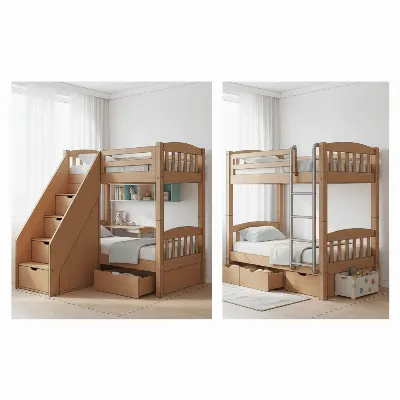 A side-by-side comparison of a bunk bed with stairs and a bunk bed with a ladder, highlighting safety and space differences.
Comparing Access Methods: Stairs vs. Ladders
When it comes to bunk bed access, the choice between stairs and ladders is a fundamental decision that impacts safety, usability, and the overall functionality of the furniture. Each method comes with its own set of distinct advantages and disadvantages that should be carefully weighed against your family’s needs and room characteristics. The critical differences often revolve around user age, space availability, and desired features.
Stairs are widely regarded as the safer option, especially for younger children (typically those aged six to eight) or individuals who may need more stability. They offer a more gradual incline with wider steps, providing a larger, more secure surface for climbing up and down. Many stair bunk beds also come equipped with handrails, adding an extra layer of security and reducing the risk of falls. Beyond safety, a significant benefit of stairs is the integrated storage they often provide, with each step concealing a drawer or cubby. This feature is invaluable for maximizing storage in small rooms, helping to keep clutter at bay. Stairs also offer more comfortable access for adults who may need to climb up to make the bed or read a bedtime story. However, the trade-off for these benefits is that stairs require considerably more floor space than a ladder, making them less suitable for very compact rooms. They are also generally more expensive due to their more complex construction and additional features.
Ladders, on the other hand, excel in space efficiency. Their vertical or slightly angled design takes up minimal floor space, making them the preferred choice for smaller bedrooms or situations where maximizing open areas is a priority. Ladders are typically more cost-effective than stair units, offering a budget-friendly solution for families. Some designs feature removable ladders, which can be useful for restricting access to the top bunk when needed, or for rearranging the room. While modern ladders can include safety features like wide steps, grooves for anti-slip, and side handles, they generally pose a higher fall risk than stairs, especially for very young children or during nighttime trips. Climbing a ladder requires more agility and balance, and the narrower rungs can be less comfortable for bare feet or for adults. Ladders also lack the inherent storage capabilities that stair units often provide.
> “The debate between bunk bed stairs and ladders boils down to prioritizing safety and storage versus space and budget. For younger users, the enhanced stability and integrated storage of stairs often make them the superior, albeit more costly, choice.” – Dr. Eleanor Vance, Child Safety Furniture Specialist
The optimal choice depends heavily on the age and agility of the primary users, the available room size, and your budget. For families with younger children or those prioritizing maximum safety and storage, stairs are typically the better investment. For older children, teenagers, or in rooms with limited space and a tighter budget, a well-designed ladder can be perfectly adequate.
Comparing Bunk Bed Materials
The material from which a bunk bed is constructed plays a pivotal role in its durability, safety, aesthetic appeal, and overall cost. With options ranging from classic wood to modern metal and lightweight plastic, understanding the characteristics of each can guide you toward the best long-term investment for your home.
- Wood Bunk Beds:
- Advantages: Solid wood bunk beds (like oak, maple, or pine) are renowned for their exceptional durability, timeless beauty, and stability. They offer a warm, natural aesthetic that can complement a wide range of interior designs, from rustic to contemporary. Wood is generally considered safe, offering sturdy construction. Engineered wood (like MDF or plywood) is a more affordable alternative, offering similar aesthetics but with slightly less durability than solid hardwood.
- Disadvantages: Solid wood bunk beds are typically the most expensive option. They can be susceptible to scratches, dents, or potential issues with pests like termites if not properly treated or maintained. Engineered wood, while cheaper, can be prone to moisture damage and may not have the same longevity as solid wood.
- Metal Bunk Beds:
- Advantages: Metal bunk beds are celebrated for their strength, exceptional durability, and often more affordable price point compared to solid wood. They are resistant to pests, easy to clean, and typically offer a sleek, modern, or industrial aesthetic. Metal frames often have a high weight capacity, making them suitable for both children and adults.
- Disadvantages: While sturdy, metal bunk beds can sometimes feel less warm or cozy than wood. They may be prone to rusting if the finish is compromised or in humid environments. Some metal designs can be squeaky over time if not assembled or maintained properly.
- Plastic Bunk Beds:
- Advantages: Plastic bunk beds are the most lightweight and often the most budget-friendly option. They are easy to move, clean, and are resistant to water and rust, making them practical for certain environments or very young children. Their vibrant colors and playful designs often appeal to younger kids.
- Disadvantages: Plastic generally has lower durability and weight capacity compared to wood or metal. They may not offer the same level of stability and might not be as aesthetically appealing for older children or adult use. Their lifespan is typically shorter than that of other materials, and they can degrade over time with exposure to sunlight.
Bunk Bed Material Comparison Table
|
Our Picks for the Best Bunk Bed in 2026
As an Amazon Associate I earn from qualifying purchases.
|
||
| Num | Product | Action |
|---|---|---|
| 1 | Delta Children Twin Loft Bed with Guardrail and Ladder + Tent (Bundle), White/Disney Princess |

|
| 2 | Breling Bunk Bed Privacy Curtains 3 Panel Play Curtain Set for Low Bunk Loft Bed with Felt Flag Double-Layer Gauze Playhouse Accessories with Tote Bags for Boy Girl Birthday Party Gift |
|
| 3 | Students Dorm Bunk Bed Curtain Home Privacy Bed Shading Curtain Net Bed Cloth Dustproof Blackout Bed Canopy Bedding Curtain Students Dormitory Tent Lightproof Cloth Bedding Canopy Spread Curtain |
|
| 4 | DICTAC Twin Over Twin Bunk Bed with 8 Storage Drawers and Led Lights Metal Bunk Beds with Storage Headboard and Charging Station,L-Shaped bunk Bed for Kids/Teen with Safety Guardrail and Ladder,Black |
|
| 5 | FDW | 6 Inch Twin Mattress | Medium Firm | Gel Memory Foam Mattress | White | Bed in a Box, CertiPUR-US Certified | Pressure Relief, Cooling Ventilated Foam | Washable Removable Cover |
|
| 6 | VIAGDO Low Loft Bed Twin Size with 9 Storage Drawers and LED Lights, Metal Twin Loft Bed with Stairway Shelf Storage, Low Loft Bed with Safety Guardrail and Under-Bed Hideaway for Kids, White |
|
| 7 | Disney Princess Loft Bed Tent - Curtain Set for Low Twin Loft Bed (Bed Sold Separately) by Delta Children |
|
| 8 | Zinus Narrow Twin Mattress (30” Wide x 75” Long), 6 Inch Foam & Spring Hybrid Mattress for Bunk Beds, Trundles, RVs & Compact Spaces, Medium Firm Feel, CertiPUR-US Certified |
|
| 9 | Twin Over Twin Metal Bunk Bed with LED Lights, USB Charging Station, 2 Drawers, Guard Rails & Ladder – No Box Spring Needed, Easy Assembly, White |
|
| 10 | Spider-Man Loft Bed Tent - Curtain Set for Low Twin Loft Bed (Bed Sold Separately) by Delta Children |
|
| Feature | Wood Bunk Beds (Solid/Engineered) | Metal Bunk Beds | Plastic Bunk Beds |
|---|---|---|---|
| Durability | High (Solid), Medium (Engineered) | High | Low-Medium |
| Price Range | High (Solid), Medium (Engineered) | Medium | Low |
| Aesthetics | High (Classic, Warm) | Medium (Modern, Industrial) | Low (Child-focused) |
| Safety | High (Sturdy, Natural) | High (Strong frame) | Medium (Lightweight) |
| Maintenance | Medium (Dust, polish, avoid moisture) | Low (Wipe clean) | Low (Wipe clean) |
| Weight Capacity | High | Very High | Low-Medium |
| Storage Potential | High (with integrated stairs/drawers) | Low | Low |
How to Choose the Best Bunk Bed
Selecting the ideal bunk bed requires careful consideration of several key factors, ensuring that your choice aligns with your family’s specific needs, available space, and budget. Beyond just aesthetics, prioritizing safety and functionality will lead to a bed that serves you well for years to come.
First, determine your usage needs. Consider who will be using the bunk bed – young children, teenagers, or adults? For very young children (under six), a bottom bunk is recommended, and if the top bunk is to be used by an older child, stairs are generally a safer and easier option than ladders due to their wider steps and potential for handrails. Also, think about the primary purpose: is it purely for sleeping, or do you need integrated features like study areas, storage drawers, or trundle beds for guests?
Next, select the appropriate material. Solid wood offers superior durability and a timeless aesthetic but comes at a higher price. Engineered wood provides a more budget-friendly wooden look. Metal bunk beds are highly durable, cost-effective, and offer a modern aesthetic, suitable for various age groups and robust use. Plastic beds are light and cheap, but less durable and mainly for very young children. The material should also complement your room’s existing decor and stand up to expected wear and tear.
Safety is paramount. Regardless of the material or access method, ensure the bunk bed’s frame is sturdy and does not wobble or creak. If opting for a ladder, look for wide, flat rungs and anti-slip features. For stairs, check for non-slip treads and robust handrails. The top bunk should have guardrails on all sides, with adequate height to prevent falls. Ensure the mattress fits snugly within the frame to avoid gaps where a child could get trapped. Always check for certifications from relevant safety standards organizations.
Choose the right size and dimensions. Measure your room carefully, noting ceiling height, wall space, and door/window clearances. The bunk bed’s overall height should allow sufficient headroom for the person on the top bunk and easy access for adults making the bed. Consider the length and width of the bed to ensure it fits comfortably without making the room feel cramped. Bunk beds with stairs will require more floor space than those with ladders.
Finally, select a reputable supplier. Look for manufacturers or retailers who offer clear warranty policies, provide detailed product specifications, and have a strong track record for customer service. A reliable supplier will also offer a variety of designs and materials, making it easier to find a bunk bed that meets all your criteria and budget. Don’t hesitate to ask questions about assembly, weight limits, and maintenance.
 A family (parents and two children) thoughtfully examining a modern bunk bed with integrated stairs and storage drawers in a brightly lit furniture showroom.
Tips for Using and Maintaining Bunk Beds
Proper use and regular maintenance are crucial for ensuring the longevity and safety of your bunk bed, regardless of whether it features stairs or a ladder. Adhering to simple guidelines can prevent accidents, extend the bed’s lifespan, and maintain its aesthetic appeal. These practices are essential for keeping the bunk bed a safe and enjoyable part of your home environment.
For safe usage, always adhere to the manufacturer’s recommended age limits for the top bunk, typically six years and older, to minimize fall risks. Emphasize to children that roughhousing, swinging, or jumping on any part of the bunk bed is strictly prohibited. The top bunk should never be overloaded with excessive weight beyond its specified capacity, and heavy items should not be placed on the upper level or stairs. Regularly inspect the bunk bed for any loose screws, bolts, or structural weaknesses, and tighten them immediately. Ensure guardrails are always securely in place on the top bunk, and for ladder beds, make sure the ladder is stable before each climb.
Regarding maintenance, regular cleaning is key. Wipe down the bed frame with a damp cloth to remove dust and dirt. For wooden bunk beds, occasionally use a furniture polish to protect the finish and prevent drying. Avoid using harsh chemical cleaners, as they can damage the material and finish. It’s also important to protect the bunk bed from direct sunlight and excessive humidity, which can cause wood to warp or fade, and metal to rust. Periodically, check all joints and connections for tightness, and re-tighten any loose hardware. For bunk beds with integrated storage stairs, ensure the drawers slide smoothly and are not overloaded, as this can cause damage to the runners. By following these simple usage and maintenance tips, your bunk bed will remain a safe, functional, and attractive piece of furniture for many years.
Bunk Bed Price Guide (General Reference)
Understanding the general price ranges for different types of bunk beds can help you budget effectively for your purchase. Prices vary significantly based on material, design complexity, integrated features, and brand. This table provides a broad overview to help you anticipate costs.
| Bunk Bed Type | Estimated Price Range (USD) |
|---|---|
| Standard Metal Bunk Bed | $150 – $400 |
| Engineered Wood Bunk Bed | $250 – $600 |
| Solid Wood Bunk Bed (Pine/Rubberwood) | $350 – $800 |
| Solid Wood Bunk Bed (Oak/Maple) | $600 – $1,500+ |
| Bunk Bed with Storage Stairs | $500 – $1,200+ |
| Themed/Multi-functional Bunk Bed | $700 – $2,000+ |
| Adult/Heavy-Duty Bunk Bed | $800 – $3,000+ |
Note: These prices are general estimates and can fluctuate based on specific features, retailers, and market conditions.
Conclusion
Choosing the right bunk bed, whether with stairs or a ladder, is a nuanced decision that significantly impacts both the safety and functionality of a room. We’ve explored how stairs offer superior safety and integrated storage, making them ideal for younger children and maximizing space, though they demand a larger footprint and investment. Conversely, ladders provide a more compact and budget-friendly solution, perfect for smaller rooms and older, more agile users. Considering the durability and aesthetic contributions of materials like solid wood, metal, and engineered wood further refines this choice.
The best bunk bed is one that perfectly balances the age and needs of its users with the spatial and budgetary constraints of your home. By prioritizing safety, understanding material strengths, and assessing access methods, you can select a bunk bed that not only provides comfortable sleeping arrangements but also enhances the overall utility and enjoyment of your living space. What unique considerations will shape your family’s ideal bunk bed choice in the years to come?
Frequently Asked Questions
Are bunk beds with stairs truly safer than those with ladders for children?
Generally, yes. Bunk beds with stairs offer a more stable and gradual ascent with wider steps and often include handrails, significantly reducing the risk of falls compared to ladders. This makes them particularly safer and easier to navigate for younger children or those who may not be as steady on their feet.
How much extra space do bunk beds with stairs typically require compared to ladders?
Bunk beds with stairs generally require more floor space, as the staircase extends out from the main bed frame, often adding anywhere from 1.5 to 3 feet in width or length, depending on the design. Ladders, being more vertical, have a much smaller footprint, making them suitable for tighter spaces.
Can adults comfortably use bunk beds with stairs?
Yes, bunk beds with stairs are often more comfortable for adults to use than ladders. The wider steps and more gradual incline make it easier for adults to climb to the top bunk, whether for making the bed, assisting a child, or simply as a guest sleeper, providing better stability and support.
Do bunk beds with stairs always include storage?
While not every bunk bed with stairs includes storage, a significant number of modern designs incorporate built-in drawers or cubbies within the steps. This integrated storage is a major advantage, offering practical space-saving solutions for clothes, toys, or books, which can be a key factor in maximizing room efficiency.
What is the recommended age for a child to sleep on the top bunk, regardless of access type?
The Consumer Product Safety Commission (CPSC) and most manufacturers recommend that children under six years old should not sleep on the top bunk of a bunk bed. This guideline helps to mitigate the risk of falls and injuries associated with accessing and sleeping in an elevated position.
Frequently Asked Questions
Are bunk beds with stairs truly safer than those with ladders for children?
Yes, bunk beds with stairs are generally safer for children. They offer a more stable and gradual ascent with wider steps and often include handrails, significantly reducing the risk of falls compared to ladders. This makes them particularly easier to navigate for younger children or those who may not be as steady on their feet.
How much extra space do bunk beds with stairs typically require compared to ladders?
Bunk beds with stairs generally require more floor space, extending anywhere from 1.5 to 3 feet in width or length beyond the main bed frame. Ladders, being more vertical, have a much smaller footprint, making them suitable for tighter spaces where maximizing open areas is a priority.
Can adults comfortably use bunk beds with stairs?
Yes, bunk beds with stairs are often more comfortable for adults to use than ladders. The wider steps and more gradual incline make it easier for adults to climb to the top bunk, whether for making the bed, assisting a child, or simply as a guest sleeper, providing better stability and support.
Do bunk beds with stairs always include storage?
While not every bunk bed with stairs includes storage, a significant number of modern designs incorporate built-in drawers or cubbies within the steps. This integrated storage is a major advantage, offering practical space-saving solutions for clothes, toys, or books, which can be a key factor in maximizing room efficiency.
What is the recommended age for a child to sleep on the top bunk, regardless of access type?
The Consumer Product Safety Commission (CPSC) and most manufacturers recommend that children under six years old should not sleep on the top bunk of a bunk bed. This guideline helps to mitigate the risk of falls and injuries associated with accessing and sleeping in an elevated position.
How to Choose the Best Bunk Bed
Selecting the ideal bunk bed requires careful consideration of several key factors, ensuring that your choice aligns with your family's specific needs, available space, and budget. Prioritizing safety and functionality will lead to a bed that serves you well for years to come.
Consider who will use the bunk bed (young children, teenagers, adults) and its primary purpose. For children under six, a bottom bunk is recommended, and stairs are safer for older children using the top bunk. Decide if integrated features like study areas or storage are needed.
Choose between solid wood for durability and aesthetics, engineered wood for a budget-friendly option, or metal for strength and modern appeal. Plastic beds are lightweight and cheap but less durable. The material should complement your room's decor and withstand wear.
Ensure the bunk bed frame is sturdy and doesn't wobble. Look for wide, flat, anti-slip ladder rungs or non-slip stair treads with robust handrails. The top bunk must have guardrails on all sides with adequate height, and the mattress should fit snugly to prevent gaps.
Measure your room carefully, considering ceiling height, wall space, and clearances. Ensure sufficient headroom for the top bunk user and easy access for adults. Remember that bunk beds with stairs require more floor space than those with ladders.
Look for manufacturers or retailers offering clear warranty policies, detailed product specifications, and strong customer service. A reliable supplier will provide diverse designs and materials, helping you find a bunk bed that meets your criteria and budget.
Get our weekly buyer guide
Practical specs, not advice. Unsubscribe anytime.

After debating between stairs and a ladder, we went with a bunk bed with stairs for our guest room. It’s mainly used by visiting grandkids, so the superior safety was a huge factor. Plus, the extra storage in the stairs is super handy for extra linens and blankets. It really helps maximize the utility of the room.
I opted for a bunk bed with a ladder for my teenage sons’ room, and it works perfectly for our smaller space. They’re agile enough that the ladder isn’t an issue, and it was definitely more budget-friendly than the stair options I looked at. It’s a solid choice if you’re trying to maximize vertical space without sacrificing too much floor area.
We just got a bunk bed with stairs for our two younger kids, aged 7 and 9, and it’s been a game-changer. The integrated storage in the stairs is fantastic for their books and small toys, really helping to keep their room tidier. It definitely takes up a bit more floor space than a ladder version, but the peace of mind knowing they’re safer climbing up and down is totally worth the higher investment.
We bought a bunk bed with stairs for our 6-year-old and 8-year-old, hoping for that extra safety. While the stairs are great, I found that the steps themselves are a bit narrow, making it a little awkward for my older child to climb comfortably. It’s still safer than a ladder, but I wish the design had wider steps for easier access.