Building your own wooden bunk bed is a rewarding and cost-effective project that maximizes space and allows for custom design. A DIY wooden bunk bed can be significantly more affordable than purchasing a pre-made unit, with material costs for a simple pine design ranging from $150 to $350, offering both functionality and aesthetic appeal tailored to your specific needs and room dimensions.
Advantages and Disadvantages of Bunk Beds
Bunk beds have long been a staple in shared bedrooms, dorms, and guest rooms, offering a practical and often playful sleeping arrangement. Their enduring popularity stems from several key benefits, but it’s also important to acknowledge their limitations before embarking on a DIY project.
One of the most significant advantages of bunk beds is their remarkable ability to save space. By stacking two beds vertically, they free up valuable floor area in smaller rooms or apartments, allowing for additional furniture, play zones, or study areas. This vertical efficiency can transform a cramped space into a functional and comfortable environment. Building a DIY bunk bed can be considerably more cost-effective than purchasing two separate beds or a pre-made bunk unit, especially when sourcing common construction lumber. Many designs offer flexibility, with some even featuring modular components that can later be separated into two single beds. For children, bunk beds often create a fun and adventurous play space, turning bedtime into an exciting experience.
However, bunk beds also come with certain disadvantages. Safety is a primary concern, particularly the risk of falls from the top bunk. This necessitates robust guard rails, a secure ladder, and strict rules against horseplay. Another consideration is the limited privacy for occupants, which might be a factor in shared rooms for older children or adults. The top bunk can be challenging to make and change bedding, requiring more effort than a standard bed.
Popular Types of Bunk Beds
The world of bunk beds extends far beyond the traditional stacked design, offering a variety of configurations to suit different needs, ages, and room layouts. Choosing the right type for your DIY project can significantly enhance functionality and aesthetics.
The traditional bunk bed remains the most common, featuring two beds directly stacked one above the other, typically a twin over twin. This classic design is straightforward to build and ideal for maximizing sleeping capacity in a compact footprint. For academic environments or children’s rooms, bunk beds with integrated study desks are incredibly practical. These designs often feature the top bunk over a built-in desk, providing a dedicated workspace without occupying extra floor space. Similarly, bunk beds with built-in wardrobes or storage units are excellent for small rooms where closet space is at a premium, incorporating drawers, shelves, or even hanging space into the bed frame itself.
More innovative are multifunctional bunk beds, which can transform to serve various purposes beyond just sleeping. Some designs allow the bottom bunk to convert into a sofa or a lounge area during the day, making them perfect for versatile living spaces or guest rooms. Others might include pull-out trundles for an additional sleeper or even a gaming area. Children’s bunk beds often feature whimsical designs, vibrant colors, or themed elements like castle towers or playhouse structures, turning the bed into a focal point for imaginative play. Conversely, adult bunk beds prioritize robust construction, simple aesthetics, and larger mattress sizes like twin over full or full over full, ensuring comfort and stability for older users or heavier loads.
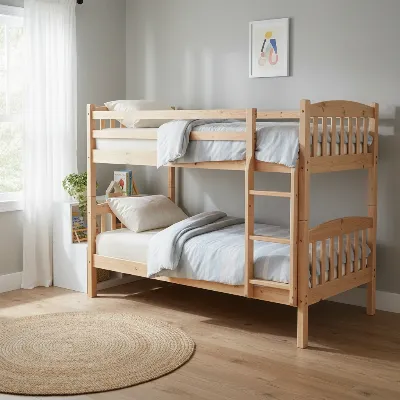 A classic wooden bunk bed in a children's room, showcasing its space-saving design with sturdy construction and a simple ladder.
Comparing Bunk Bed Materials
When building a DIY bunk bed, the choice of material is paramount, influencing durability, aesthetics, safety, and ultimately, the overall budget. Wood, metal, and plastic are the primary options, each with distinct characteristics.
Wood bunk beds are a popular choice for DIY projects, especially when aiming for a tight budget, as common construction lumber (like pine) is relatively inexpensive and easy to work with.
- Advantages: Wood offers excellent durability and a timeless, aesthetic appeal that can create a warm and inviting atmosphere. It is generally considered safe when properly constructed, with smooth finishes and no sharp edges. Wood also allows for significant customization in terms of design and finish.
- Disadvantages: Compared to some metal options, wood can be more expensive initially, depending on the type of wood chosen. It is also susceptible to issues like termites or mold if not properly treated and maintained.
Metal bunk beds are often found in commercial or institutional settings due to their strength and low maintenance.
- Advantages: Metal frames are typically very sturdy and can withstand significant wear and tear. They are generally more affordable than many wooden options and are easy to clean and maintain.
- Disadvantages: Metal frames can sometimes lack the warmth and aesthetic appeal of wood, appearing more industrial. They can also be prone to rust if the finish is compromised or if exposed to high humidity.
Plastic bunk beds are less common for DIY projects involving structural elements, but plastic components might be used for decorative or storage features.
- Advantages: Plastic is lightweight and easy to move, making assembly and rearrangement simpler. It is also resistant to water and many chemicals.
- Disadvantages: Plastic generally has lower durability and load-bearing capacity compared to wood or metal, making it less suitable for the primary structural frame of a bunk bed, especially for adults. It may also offer a less sophisticated aesthetic.
Bunk Bed Material Comparison Table
Understanding the trade-offs between different materials is crucial for a successful DIY bunk bed project on a budget. This table provides a quick comparison of the most common materials.
| Feature | Wooden Bunk Bed | Metal Bunk Bed | Plastic Bunk Bed |
|---|---|---|---|
| Durability | High | High | Medium |
| Cost | Medium to High | Low to Medium | Low |
| Aesthetics | High (natural look) | Medium (industrial) | Low (less robust) |
| Safety | High (sturdy) | Medium (potential sharp edges if poorly finished) | Medium (less structural integrity) |
| Ease of Cleaning | Medium (requires care) | High (wipeable) | High (wipeable) |
| Load Capacity | High | High | Medium |
Guide to Choosing and Buying a Bunk Bed Components
Building a DIY bunk bed involves careful planning and selection of materials and hardware. Here’s a guide to help you choose the right components and approach for your budget-friendly project.
First, determine your usage needs. Consider who will be using the bunk bed – children, teenagers, or adults? This dictates the required sturdiness and size. What is the primary purpose? Is it purely for sleeping, or do you need integrated storage, a desk, or a play area? Finally, accurately measure the dimensions of the room, including ceiling height, to ensure the bunk bed fits comfortably and safely without feeling cramped. A common ceiling height recommendation is to have at least two feet of clearance between the top mattress and the ceiling for the user’s comfort and safety.
Next, choose appropriate materials. For a tight budget, common softwood lumber like pine is an excellent choice. It’s affordable, widely available, and relatively easy to cut, drill, and finish. Ensure the wood is straight and free of major knots or defects to guarantee structural integrity. For the mattress supports, plywood is a cost-effective and sturdy option.
Checking safety is non-negotiable. The bed frame must be sturdy and stable, with no wobbling or creaking. Prioritize strong joints and secure fasteners. The top bunk requires high guard rails to prevent falls, typically extending at least 5 inches above the top of the mattress. Ensure the spacing between guard rail slats is narrow enough to prevent a child from getting stuck. The ladder must be robust, securely attached, and have wide, comfortable rungs. Many DIY plans use 2x4s for ladder legs and dowels or smaller 2x4s for rungs, securely fastened with screws and wood glue.
Select suitable dimensions for your chosen mattress size (twin, full, queen). The overall height of the bunk bed should leave ample headroom for both sleepers and ensure the top bunk user can sit up comfortably without hitting the ceiling. The width and length must perfectly accommodate your mattresses.
Finally, while you are building it yourself, you are “sourcing” components. Choose reputable suppliers for your lumber and hardware. Local lumber yards often offer better prices and quality than big box stores. Look for stores with clear return policies and knowledgeable staff who can help you select the right types and quantities of wood and fasteners. Buying in bulk or during sales can further help you stick to a tight budget.
> “Building a bunk bed on a budget means smart material choices. Common pine lumber and good quality screws are your best friends for a sturdy, affordable build.” – Johnathan Reed, Master Carpenter
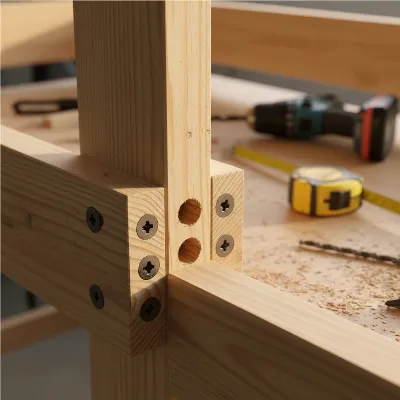 Close-up of a DIY wooden bunk bed under construction, showing sturdy joints, screws, and pre-drilled holes, highlighting the safety and attention to detail.
Tips for Using and Maintaining Bunk Beds
Once your DIY wooden bunk bed is complete, proper usage and diligent maintenance are essential to ensure its longevity and, most importantly, the safety of its users. Adhering to these tips will help you enjoy your creation for years to come.
For safe usage, it’s crucial to establish clear rules, especially for children. Do not allow roughhousing or excessive climbing on the bunk bed, particularly on the top bunk. Always ensure that only one person occupies the top bunk at a time, and instruct users to climb the ladder facing the bed, using both hands. Avoid placing heavy objects on the top bunk or hanging items from the frame, as this can compromise its structural integrity. Regularly inspect the bunk bed for any signs of wear and tear, loose screws, or damaged wood. Address these issues promptly to prevent accidents.
Effective maintenance will preserve the appearance and stability of your wooden bunk bed. Clean the bed regularly using a soft, damp cloth to wipe down dust and dirt. Avoid harsh chemical cleaners, which can damage the wood finish. If your bunk bed is near a window, try to avoid direct, prolonged exposure to sunlight, which can cause wood to fade or dry out. Consider using curtains or blinds to protect the wood. Finally, periodically check and tighten all screws, bolts, and fasteners on the frame. Wood can expand and contract with temperature and humidity changes, potentially loosening connections over time. A quick check every few months can prevent instability and ensure the bed remains as sturdy as the day you built it.
Reference Price Table for Bunk Beds
While building a DIY bunk bed can be very cost-effective, it’s helpful to have a general idea of material costs and how they compare to store-bought options. Prices for materials can fluctuate based on location and market conditions. This table provides estimated costs for the materials of different types of wooden bunk beds, assuming a DIY approach on a tight budget.
| Type of Bunk Bed (DIY Materials) | Estimated Price Range (USD) |
|---|---|
| Pine Wood Bunk Bed (Simple Design) | $150 – $350 |
| Plywood Bunk Bed (Basic, with some storage) | $250 – $500 |
| Hardwood Bunk Bed (e.g., Oak, more complex) | $500 – $1000+ |
| Metal Frame Bunk Bed (DIY using square tubing) | $200 – $450 |
| Plastic Bunk Bed (Not recommended for structural frame) | (N/A for structural DIY) |
Note: These prices are estimates for materials only and do not include tools, paint/stain, or accessories like mattresses. The “pine wood bunk bed (simple design)” category aligns well with the “under $200” budget mentioned in initial research, especially if common dimension lumber is used and finished simply.
Conclusion
Building a DIY wooden bunk bed on a tight budget is a highly achievable and rewarding project that offers significant benefits, from space-saving to customization. By carefully considering the design, selecting affordable yet sturdy materials like pine lumber, and committing to meticulous construction, you can create a safe, durable, and aesthetically pleasing sleeping solution for your home. to prioritize safety features such as robust guard rails and a strong ladder, and to regularly maintain your bunk bed for lasting stability.
This journey not only provides a functional piece of furniture but also enhances your woodworking skills and brings a sense of accomplishment. Are you ready to improve your space with a custom-built bunk bed that perfectly fits your family’s needs and budget?
Frequently Asked Questions
What kind of wood is best for building a DIY bunk bed on a budget?
|
Our Picks for the Best Bunk Bed in 2026
As an Amazon Associate I earn from qualifying purchases.
|
||
| Num | Product | Action |
|---|---|---|
| 1 | Students Dorm Bunk Bed Curtain Home Privacy Bed Shading Curtain Net Bed Cloth Dustproof Blackout Bed Canopy Bedding Curtain Students Dormitory Tent Lightproof Cloth Bedding Canopy Spread Curtain |

|
| 2 | Disney Princess Loft Bed Tent - Curtain Set for Low Twin Loft Bed (Bed Sold Separately) by Delta Children |
|
| 3 | VIAGDO Low Loft Bed Twin Size with 9 Storage Drawers and LED Lights, Metal Twin Loft Bed with Stairway Shelf Storage, Low Loft Bed with Safety Guardrail and Under-Bed Hideaway for Kids, White |
|
| 4 | Delta Children Twin Loft Bed with Guardrail and Ladder + Tent (Bundle), White/Disney Princess |
|
| 5 | Twin Over Twin Metal Bunk Bed with LED Lights, USB Charging Station, 2 Drawers, Guard Rails & Ladder – No Box Spring Needed, Easy Assembly, White |
|
| 6 | Zinus Narrow Twin Mattress (30” Wide x 75” Long), 6 Inch Foam & Spring Hybrid Mattress for Bunk Beds, Trundles, RVs & Compact Spaces, Medium Firm Feel, CertiPUR-US Certified |
|
| 7 | DICTAC Twin Over Twin Bunk Bed with 8 Storage Drawers and Led Lights Metal Bunk Beds with Storage Headboard and Charging Station,L-Shaped bunk Bed for Kids/Teen with Safety Guardrail and Ladder,Black |
|
| 8 | Breling Bunk Bed Privacy Curtains 3 Panel Play Curtain Set for Low Bunk Loft Bed with Felt Flag Double-Layer Gauze Playhouse Accessories with Tote Bags for Boy Girl Birthday Party Gift |
|
| 9 | FDW | 6 Inch Twin Mattress | Medium Firm | Gel Memory Foam Mattress | White | Bed in a Box, CertiPUR-US Certified | Pressure Relief, Cooling Ventilated Foam | Washable Removable Cover |
|
| 10 | Spider-Man Loft Bed Tent - Curtain Set for Low Twin Loft Bed (Bed Sold Separately) by Delta Children |
|
For a budget-friendly DIY bunk bed, common construction lumber like pine (e.g., 2x4s, 2x6s) is highly recommended. It is affordable, widely available, and relatively easy to work with for most home woodworkers, providing sufficient strength when properly joined.
How much clearance is needed between bunk beds and the ceiling?
It’s generally recommended to have at least two feet (24 inches) of clearance between the top of the upper mattress and the ceiling. This ensures comfort and safety for the person sleeping on the top bunk, allowing them to sit up without hitting their head.
What are the most important safety features for a DIY bunk bed?
The most critical safety features include sturdy guard rails on all open sides of the top bunk, extending at least 5 inches above the mattress. A securely attached ladder with wide, evenly spaced rungs, and a robust, wobble-free overall frame construction are also essential.
Can a DIY wooden bunk bed support adults?
Yes, a well-constructed DIY wooden bunk bed using appropriate lumber dimensions (e.g., 2x6s for main frame, 2x4s for supports) and strong fastening methods (screws, bolts, wood glue) can certainly support adults. Ensure your design and material choices account for the weight of adult sleepers.
What tools are essential for building a bunk bed on a budget?
Essential tools for a budget DIY bunk bed include a miter saw or circular saw for accurate cuts, an impact drill for driving screws and drilling pilot holes, a power sander for smoothing surfaces, a tape measure, a level, and clamps for holding pieces during assembly.
How can I make my DIY bunk bed project more affordable?
To make your project more affordable, use common construction-grade pine lumber, buy screws and fasteners in bulk, and consider simple designs that require fewer complex cuts or specialized hardware. Look for lumber sales or use salvaged wood if safe and suitable.
How long does it typically take to build a DIY wooden bunk bed?
The time required to build a DIY wooden bunk bed can vary significantly based on your experience level and the complexity of the design. Many simple plans suggest it can be completed in one to two weekends, assuming all materials and tools are readily available.
Frequently Asked Questions
What kind of wood is best for building a DIY bunk bed on a budget?
For a budget-friendly DIY bunk bed, common construction lumber like pine (e.g., 2x4s, 2x6s) is highly recommended. It is affordable, widely available, and relatively easy to work with for most home woodworkers, providing sufficient strength when properly joined.
How much clearance is needed between bunk beds and the ceiling?
It's generally recommended to have at least two feet (24 inches) of clearance between the top of the upper mattress and the ceiling. This ensures comfort and safety for the person sleeping on the top bunk, allowing them to sit up without hitting their head.
What are the most important safety features for a DIY bunk bed?
The most critical safety features include sturdy guard rails on all open sides of the top bunk, extending at least 5 inches above the mattress. A securely attached ladder with wide, evenly spaced rungs, and a robust, wobble-free overall frame construction are also essential.
Can a DIY wooden bunk bed support adults?
Yes, a well-constructed DIY wooden bunk bed using appropriate lumber dimensions (e.g., 2x6s for main frame, 2x4s for supports) and strong fastening methods (screws, bolts, wood glue) can certainly support adults. Ensure your design and material choices account for the weight of adult sleepers.
What tools are essential for building a bunk bed on a budget?
Essential tools for a budget DIY bunk bed include a miter saw or circular saw for accurate cuts, an impact drill for driving screws and drilling pilot holes, a power sander for smoothing surfaces, a tape measure, a level, and clamps for holding pieces during assembly.
How can I make my DIY bunk bed project more affordable?
To make your project more affordable, use common construction-grade pine lumber, buy screws and fasteners in bulk, and consider simple designs that require fewer complex cuts or specialized hardware. Look for lumber sales or use salvaged wood if safe and suitable.
Build a Budget-Friendly Wooden Bunk Bed
This guide outlines the steps to plan, select materials, and construct a safe and sturdy wooden bunk bed on a tight budget.
Identify who will use the bunk bed (children, adults) and its primary purpose (sleeping, storage, desk). Accurately measure the room, including ceiling height, ensuring at least 24 inches of clearance between the top mattress and the ceiling for safety and comfort.
Select common softwood lumber like pine for a cost-effective and easy-to-work-with option. Ensure the wood is straight and free of defects. Plywood is a sturdy and affordable choice for mattress supports.
Ensure the bed frame is sturdy and stable with strong joints and secure fasteners. Install high guard rails (at least 5 inches above the mattress) on the top bunk and a robust, securely attached ladder with wide, comfortable rungs.
Choose dimensions that perfectly accommodate your chosen mattress size (twin, full, queen). The overall bunk bed height should provide ample headroom for both sleepers, allowing the top bunk user to sit up comfortably.
Purchase lumber and hardware from local lumber yards, which often offer better prices and quality than large retail stores. Look for sales or buy in bulk to further reduce costs while ensuring good quality materials.
Get our weekly buyer guide
Practical specs, not advice. Unsubscribe anytime.

We decided to tackle a DIY wooden bunk bed for our guest room after reading about the space-saving advantages. It was definitely a project, but the instructions were clear enough for a novice like me. My only minor complaint is that getting the top bunk perfectly level took a bit more finagling than I expected. Still, it looks great and frees up so much floor space.
I was so intimidated by the idea of building our own bunk bed, but this guide made it feel totally doable. We went with a simple pine design for our kids’ room, and the material costs were right in that $150-$350 range mentioned. It really helped us maximize the space in their small room, and they absolutely love having their own custom beds. Highly recommend for anyone on a budget!
This was exactly what I needed to get started on a bunk bed for my twin boys. The emphasis on how much floor area you save by stacking two beds vertically was a huge selling point for our small apartment. We used a sturdy wood and it feels incredibly solid. The boys are thrilled, and I’m proud of what we built!
I appreciated the breakdown of how much more affordable building your own bunk bed can be compared to buying one. We tried to follow the steps for a custom design, but I found some of the measurements a little tricky to adapt for our specific room dimensions. It turned out okay in the end, but it was a bit more challenging than I anticipated. Next time I might just buy a pre-made unit.