Choosing between metal and wood bunk beds depends on specific needs, aesthetic preferences, and budget. Metal bunk beds typically offer greater affordability, durability, and a modern aesthetic, making them ideal for practical, easy-to-maintain, space-saving solutions. Wood bunk beds, on the other hand, provide a warm, classic appeal, superior customizability, and a robust, quiet structure, often representing a lasting investment for a cozy and traditional space. Both materials offer high safety when meeting current standards, including sturdy guardrails and secure ladders.
Advantages and Disadvantages of Bunk Beds
Bunk beds are a quintessential solution for maximizing sleeping capacity in compact spaces, making them exceptionally popular in children’s rooms, guest areas, and dormitories. Their vertical design intelligently utilizes floor space, freeing up room for other furniture, play areas, or study nooks. Many models also offer flexibility, with some designs allowing conversion into two separate single beds as needs evolve. This adaptability, coupled with often more affordable pricing compared to purchasing two individual beds, highlights their practical appeal.
However, bunk beds also come with inherent considerations. Safety is paramount, particularly concerning falls from the upper bunk, which necessitates strict adherence to safety standards and vigilant usage. The elevated position can limit headroom for the lower sleeper and challenge simple tasks like changing sheets on the top mattress. The shared nature of bunk beds can sometimes compromise individual privacy, a factor that might be a concern for older children or adults.
Common Types of Bunk Beds
The versatility of bunk beds extends to a wide array of configurations, each designed to cater to specific spatial needs and preferences. The standard bunk bed remains the most common, featuring two twin-sized mattresses stacked directly one above the other. This classic design is a timeless choice for siblings sharing a room.
For families requiring more varied sleeping arrangements, the twin-over-full bunk bed offers a twin-sized mattress on top and a full-sized bed below, perfect for older children or accommodating guests. Similarly, full-over-full bunk beds provide two double beds, capable of sleeping up to four people.
Beyond these traditional stacks, innovative designs incorporate additional functionality. Loft beds elevate a single bed, leaving the entire lower area open for a desk, seating, or storage, effectively creating a multi-functional zone. L-shaped bunk beds arrange the lower bed at a right angle to the top bunk, forming an “L” shape and often creating a corner space for a desk or bookshelf. Other specialized types include futon bunk beds with a convertible sofa on the bottom, trundle bunk beds featuring a pull-out third bed for sleepovers, and storage bunk beds with integrated drawers or shelves to maximize organization.
Comparing Bunk Bed Materials
When it comes to the construction of a bunk bed, the primary materials you’ll encounter are wood and metal, each bringing a distinct set of characteristics to the table. Understanding these differences is key to choosing a bed that aligns with your priorities for durability, aesthetics, and maintenance.
-
Wood Bunk Beds: Often crafted from solid hardwoods like pine, oak, or maple, wooden bunk beds are celebrated for their classic charm and natural warmth. They infuse a cozy, inviting ambiance into any room and are highly customizable, allowing for various stains or paint finishes to match diverse interior styles. Wood frames generally offer a solid, sturdy feel, contributing to less noise and wobble, making them a preferred choice for a traditional or homely aesthetic. However, high-quality wood can be pricier and the frames are heavier, making them more challenging to move or assemble. While durable, they can be more susceptible to scratches and cosmetic damage than metal.
-
Metal Bunk Beds: Characterized by sleek lines and a more modern, industrial aesthetic, metal bunk beds—typically made from steel or iron—are known for their strength, stability, and often lighter weight. They are generally more affordable than their wooden counterparts and are resistant to scratches, dents, and water damage, simplifying maintenance. Metal frames are also less prone to issues like pests or mildew, making them a practical choice for high-traffic environments or humid climates. A potential drawback is the “colder” feel and the possibility of squeaking or rattling over time, especially with lower-quality models.
-
Plastic Bunk Beds: While plastic is not typically used for the main structural frame of a bunk bed due to its lower strength and durability, it often appears as a supplementary material in certain components. These plastic parts can be lightweight, low-cost, easy to clean, and resistant to water damage, making them suitable for accents or child-friendly features.
Bunk Bed Material Comparison
| Feature | Wood Bunk Beds | Metal Bunk Beds | Plastic Components (Supplemental) |
|---|---|---|---|
| Durability | High (especially hardwood) | High | Medium (for supplemental parts) |
| Cost | High | Medium-Low | Low |
| Aesthetics | Warm, classic, customizable | Modern, industrial, sleek | Functional, often child-friendly |
| Safety | High (solid construction) | High (sturdy frames) | Varies (not for main structure) |
| Ease of Cleaning | Medium | High | High |
| Weight Capacity | High | High | Low (not for primary support) |
Guide to Choosing the Best Bunk Bed
Selecting the ideal bunk bed requires thoughtful consideration of several factors to ensure it meets your family’s needs, complements your space, and prioritizes safety.
-
Determine Your Usage Needs: First, consider who will use the bunk bed. Is it for young children, teenagers, or occasional adult guests? The purpose—whether primarily for sleeping, incorporating a study area, or requiring integrated storage—will guide your choices. Also, assess the dimensions of the room, including ceiling height, to ensure a comfortable fit and adequate headroom.
-
Choose the Right Material:
- Wood: Opt for wood if you value a warm, traditional aesthetic, customizability, and a solid, quiet feel. Hardwoods offer superior durability and can be a long-term investment.
- Metal: Select metal for a modern, minimalist look, greater affordability, and ease of maintenance. Metal frames are generally lighter and highly durable against everyday wear and tear.
-
Prioritize Safety Features: The frame must be sturdy and stable, free from any wobbling or shaking. Crucially, ensure the top bunk features guardrails on all sides, with the exception of the side against a wall. These guardrails should extend at least 5 inches above the mattress surface, and the gaps between slats must be no more than 3.5 inches to prevent entrapment. The ladder or stairs should be robust, securely attached, and easy to climb.
-
Select Appropriate Dimensions: Measure your room carefully. The bunk bed’s height should allow enough space between the top bunk and the ceiling for the sleeper to sit up comfortably. Also, ensure the bed’s length and width are suitable for the users, providing ample room without overcrowding the bedroom.
-
Choose a Reputable Supplier: Always purchase from a trusted manufacturer or retailer that provides clear warranty policies and a wide selection of models. A knowledgeable sales team can offer valuable guidance and ensure you select a bed that meets stringent safety standards.
Tips for Using and Maintaining Bunk Beds
Proper usage and regular maintenance are crucial for ensuring the longevity and safety of your bunk bed. By following a few simple guidelines, you can keep your bunk bed in excellent condition for years to come.
-
Usage Guidelines:
- Children under six years old should not use the top bunk to prevent falls.
- Always use the ladder for climbing up and down the top bunk; discourage climbing on other parts of the bed.
- Do not allow roughhousing, jumping, or excessive play on the bunk bed, especially on the top bunk.
- Avoid placing heavy objects on the top bunk that could fall.
- Regularly check all bolts and screws to ensure they are tight and the frame is stable.
-
Maintenance Tips:
- Clean the bed frame regularly with a damp cloth to remove dust and dirt. For metal beds, dry thoroughly to prevent rust.
- Avoid direct exposure to harsh sunlight, which can fade wood finishes or cause some materials to degrade over time.
- Periodically inspect the entire bed structure, including guardrails, ladder connections, and mattress slats, for any signs of wear, damage, or looseness. Tighten any loose fittings immediately.
- Ensure the mattress fits snugly within the frame, leaving no gaps where a child could become trapped.
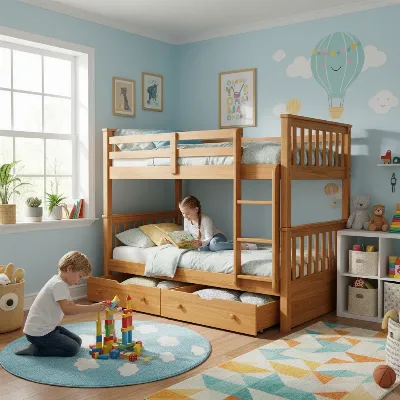 Children playing safely around a modern wooden bunk bed with integrated storage
Reference Price Guide for Bunk Beds
The cost of bunk beds varies significantly based on material, size, design complexity, and brand. This table provides a general reference for average prices.
| Bunk Bed Type | Estimated Price Range (USD) |
|---|---|
| Pine Wood Bunk Bed | $300 – $700 |
| Engineered Wood Bunk Bed | $250 – $500 |
| Metal Bunk Bed | $150 – $350 |
| Plastic Bunk Bed (small/accent) | $100 – $250 |
| Solid Hardwood Bunk Bed | $500 – $1,500+ |
| Bunk Bed with Desk/Storage | $400 – $1,200 |
Prices are estimates and can vary based on retailer, features, and specific models.
Conclusion
The choice between a metal or wood bunk bed ultimately hinges on your specific needs, aesthetic preferences, and budget. Metal bunk beds offer affordability, durability, and a modern aesthetic, proving ideal for those seeking a practical, space-saving solution that is easy to maintain. Wood bunk beds, conversely, provide a warm, classic appeal, superior customizability, and a robust, quiet structure, making them a lasting investment for a cozy and traditional space. Regardless of the material, prioritizing safety features like sturdy guardrails and secure ladders is paramount to ensure a safe sleeping environment.
By carefully evaluating factors such as user age, room size, and desired features, you can confidently select a bunk bed that not only maximizes space but also enhances your home’s functionality and style. Which material best aligns with your vision for the perfect bunk bed?
Frequently Asked Questions
Are metal bunk beds safe for young children?
|
Our Picks for the Best Bunk Bed in 2026
As an Amazon Associate I earn from qualifying purchases.
|
||
| Num | Product | Action |
|---|---|---|
| 1 | Students Dorm Bunk Bed Curtain Home Privacy Bed Shading Curtain Net Bed Cloth Dustproof Blackout Bed Canopy Bedding Curtain Students Dormitory Tent Lightproof Cloth Bedding Canopy Spread Curtain |

|
| 2 | Disney Princess Loft Bed Tent - Curtain Set for Low Twin Loft Bed (Bed Sold Separately) by Delta Children |
|
| 3 | FDW | 6 Inch Twin Mattress | Medium Firm | Gel Memory Foam Mattress | White | Bed in a Box, CertiPUR-US Certified | Pressure Relief, Cooling Ventilated Foam | Washable Removable Cover |
|
| 4 | VIAGDO Low Loft Bed Twin Size with 9 Storage Drawers and LED Lights, Metal Twin Loft Bed with Stairway Shelf Storage, Low Loft Bed with Safety Guardrail and Under-Bed Hideaway for Kids, White |
|
| 5 | Spider-Man Loft Bed Tent - Curtain Set for Low Twin Loft Bed (Bed Sold Separately) by Delta Children |
|
| 6 | Zinus Narrow Twin Mattress (30” Wide x 75” Long), 6 Inch Foam & Spring Hybrid Mattress for Bunk Beds, Trundles, RVs & Compact Spaces, Medium Firm Feel, CertiPUR-US Certified |
|
| 7 | Delta Children Twin Loft Bed with Guardrail and Ladder + Tent (Bundle), White/Disney Princess |
|
| 8 | Twin Over Twin Metal Bunk Bed with LED Lights, USB Charging Station, 2 Drawers, Guard Rails & Ladder – No Box Spring Needed, Easy Assembly, White |
|
| 9 | DICTAC Twin Over Twin Bunk Bed with 8 Storage Drawers and Led Lights Metal Bunk Beds with Storage Headboard and Charging Station,L-Shaped bunk Bed for Kids/Teen with Safety Guardrail and Ladder,Black |
|
| 10 | Breling Bunk Bed Privacy Curtains 3 Panel Play Curtain Set for Low Bunk Loft Bed with Felt Flag Double-Layer Gauze Playhouse Accessories with Tote Bags for Boy Girl Birthday Party Gift |
|
Metal bunk beds are generally very sturdy and safe, provided they meet current safety standards with proper guardrails and a secure ladder. However, children under six years old are typically advised against sleeping on the top bunk of any bunk bed, regardless of material, due to the risk of falls. Always ensure the bed is assembled correctly and routinely checked for stability.
Can wood bunk beds be separated into two individual beds?
Many wooden bunk bed models offer a convertible design, allowing them to be separated into two distinct single beds. This feature provides excellent versatility, enabling you to adapt the room layout as children grow or if you decide to reconfigure the space. Always check the product specifications to confirm if a specific model has this detachable capability.
Frequently Asked Questions
What are the main differences between wood and metal bunk beds?
Wood bunk beds offer a classic, warm aesthetic, superior customizability, and a solid feel, often costing between $300 and $1,500+. Metal bunk beds provide a modern, industrial look, are generally more affordable ($150-$350), and are easier to maintain due to resistance to scratches and water damage. Both offer high durability and safety when constructed to standards.
Are metal bunk beds safe for young children?
Metal bunk beds are generally very sturdy and safe, provided they meet current safety standards with proper guardrails and a secure ladder. However, children under six years old are typically advised against sleeping on the top bunk of any bunk bed, regardless of material, due to the risk of falls. Always ensure the bed is assembled correctly and routinely checked for stability.
Can wood bunk beds be separated into two individual beds?
Many wooden bunk bed models offer a convertible design, allowing them to be separated into two distinct single beds. This feature provides excellent versatility, enabling you to adapt the room layout as children grow or if you decide to reconfigure the space. Always check the product specifications to confirm if a specific model has this detachable capability.
What safety features should I look for in a bunk bed?
Prioritize a sturdy and stable frame with no wobbling. The top bunk must have guardrails on all sides (except against a wall) extending at least 5 inches above the mattress surface. Gaps between slats should be no more than 3.5 inches to prevent entrapment, and the ladder or stairs must be robust and securely attached.
How much do bunk beds typically cost?
Bunk bed prices vary significantly by material and design. Metal bunk beds typically range from $150-$350, while pine wood bunk beds are $300-$700. Solid hardwood models can cost $500-$1,500+, and bunk beds with integrated desks or storage are usually between $400-$1,200.
How to Choose the Best Bunk Bed
Selecting the ideal bunk bed involves considering usage needs, material, safety features, dimensions, and supplier reputation to ensure it meets your family's requirements and complements your space.
Consider who will use the bunk bed (children, teenagers, adults) and its primary purpose (sleeping, study, storage). Measure the room carefully, including ceiling height, to ensure adequate headroom and a comfortable fit for the chosen bunk bed type.
Opt for wood if you prefer a warm, traditional aesthetic, customizability, and a solid, quiet feel, with hardwoods offering superior durability. Select metal for a modern, minimalist look, greater affordability, and ease of maintenance, as metal frames are generally lighter and highly durable against wear and tear.
Ensure the frame is sturdy and stable, free from wobbling. The top bunk must have guardrails on all sides (except against a wall) extending at least 5 inches above the mattress. Gaps between slats should be no more than 3.5 inches, and the ladder or stairs must be robust and securely attached.
Measure your room carefully to ensure the bunk bed's height allows enough space between the top bunk and the ceiling for comfortable sitting. Also, verify that the bed's length and width are suitable for the users without overcrowding the bedroom.
Always purchase from a trusted manufacturer or retailer that provides clear warranty policies and a wide selection of models. A knowledgeable sales team can offer valuable guidance and ensure you select a bed that meets stringent safety standards.
Get our weekly buyer guide
Practical specs, not advice. Unsubscribe anytime.

Our new wooden bunk bed is a fantastic investment for our kids’ shared bedroom. The robust structure gives me peace of mind regarding safety, especially with the sturdy guardrails. It really freed up a lot of floor space, allowing for more play area, which was a major goal for us.
I was torn between metal and wood, but ended up choosing a metal bunk bed for my son’s dorm room. The affordability and durability were key factors for us, and it definitely fits the bill. It’s super easy to maintain, which is a big win for a college student. It has a modern look that he really likes.
We went with a wooden bunk bed for our kids’ room after reading about the classic appeal, and it really does make the room feel so much cozier. The superior customizability was a huge plus too, as we found one that perfectly matched their existing furniture. It feels incredibly sturdy and quiet, which is great for restless sleepers.
We got a metal bunk bed for our guest room because we needed a space-saving solution. While it’s definitely practical and durable, I do find it a bit squeaky sometimes when someone moves around on the top bunk. I wish it was a bit quieter like some of the wooden options mentioned, but for the price, it’s okay.