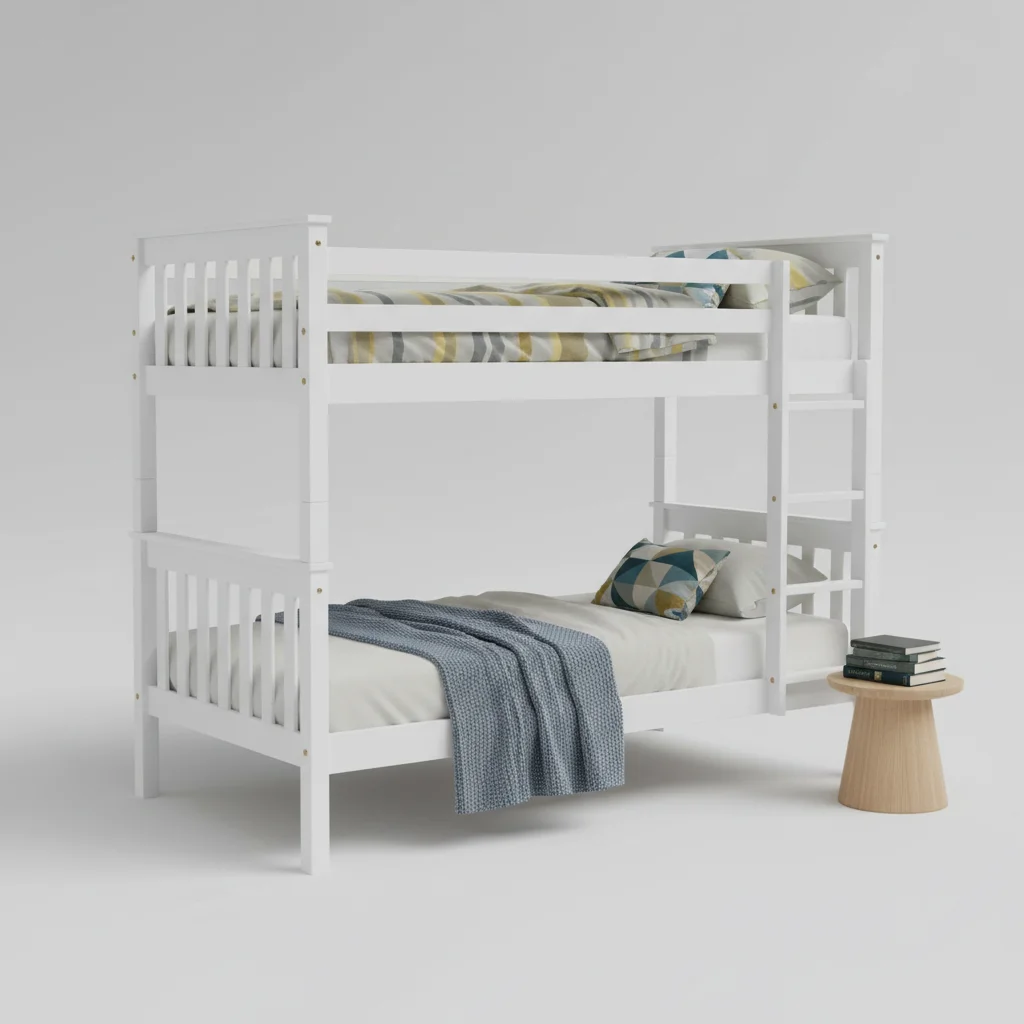
Determining the ideal bunk bed headroom is crucial for comfort and safety, especially for the top bunk sleeper. Generally, a minimum of 24 to 30 inches of space between the top bunk mattress and the ceiling is recommended. This allows for comfortable sitting upright without bumping one’s head, and also provides adequate air circulation. Factors such as the height of the person sleeping on the top bunk, the thickness of the mattress, and the overall ceiling height of the room all play a significant role in calculating the optimal headroom.
Understanding Bunk Bed Dimensions and Ceiling Height
When selecting a bunk bed, it’s essential to consider not only the bed’s dimensions but also your room’s ceiling height. Standard bunk beds typically range from 60 to 70 inches in height. If your ceiling is 8 feet (96 inches) high, a 65-inch tall bunk bed would leave approximately 31 inches of space from the top bunk mattress to the ceiling, assuming a 6-inch mattress. Always measure your room’s ceiling height accurately before purchasing to ensure sufficient clearance. This prevents a cramped feeling and reduces the risk of accidental head bumps, which is particularly important for active children or taller individuals.
Safety Standards and Headroom Requirements
While specific headroom requirements aren’t always explicitly detailed in general bunk bed safety standards, the underlying principle is to prevent entrapment and ensure safe use. Adequate headroom is indirectly addressed by guidelines that recommend sufficient space for safe entry and exit, and to prevent contact with the ceiling. For instance, the Consumer Product Safety Commission (CPSC) provides guidelines for bunk bed safety, focusing on guardrail height and mattress support. Ensuring at least 24 inches of clearance above the top mattress helps meet the spirit of these safety recommendations by providing a comfortable and safe environment. Always prioritize a design that allows the top bunk occupant to sit up fully without obstruction.
Factors Affecting Optimal Headroom
|
Our Picks for the Best Bunk Bed in 2026
As an Amazon Associate I earn from qualifying purchases.
|
||
| Num | Product | Action |
|---|---|---|
| 1 | DICTAC Twin Over Twin Bunk Bed with 8 Storage Drawers and Led Lights Metal Bunk Beds with Storage Headboard and Charging Station,L-Shaped bunk Bed for Kids/Teen with Safety Guardrail and Ladder,Black |

|
| 2 | Zinus Narrow Twin Mattress (30” Wide x 75” Long), 6 Inch Foam & Spring Hybrid Mattress for Bunk Beds, Trundles, RVs & Compact Spaces, Medium Firm Feel, CertiPUR-US Certified |
|
| 3 | Twin Over Twin Metal Bunk Bed with LED Lights, USB Charging Station, 2 Drawers, Guard Rails & Ladder – No Box Spring Needed, Easy Assembly, White |
|
| 4 | Disney Princess Loft Bed Tent - Curtain Set for Low Twin Loft Bed (Bed Sold Separately) by Delta Children |
|
| 5 | Spider-Man Loft Bed Tent - Curtain Set for Low Twin Loft Bed (Bed Sold Separately) by Delta Children |
|
| 6 | Breling Bunk Bed Privacy Curtains 3 Panel Play Curtain Set for Low Bunk Loft Bed with Felt Flag Double-Layer Gauze Playhouse Accessories with Tote Bags for Boy Girl Birthday Party Gift |
|
| 7 | FDW | 6 Inch Twin Mattress | Medium Firm | Gel Memory Foam Mattress | White | Bed in a Box, CertiPUR-US Certified | Pressure Relief, Cooling Ventilated Foam | Washable Removable Cover |
|
| 8 | VIAGDO Low Loft Bed Twin Size with 9 Storage Drawers and LED Lights, Metal Twin Loft Bed with Stairway Shelf Storage, Low Loft Bed with Safety Guardrail and Under-Bed Hideaway for Kids, White |
|
| 9 | Delta Children Twin Loft Bed with Guardrail and Ladder + Tent (Bundle), White/Disney Princess |
|
| 10 | Students Dorm Bunk Bed Curtain Home Privacy Bed Shading Curtain Net Bed Cloth Dustproof Blackout Bed Canopy Bedding Curtain Students Dormitory Tent Lightproof Cloth Bedding Canopy Spread Curtain |
|
Several factors influence the optimal bunk bed headroom. The age and height of the person using the top bunk are paramount; a taller teenager will require more vertical space than a younger child. The thickness of the mattress also directly impacts the available headroom. A thicker mattress, while potentially more comfortable, will reduce the space between the mattress surface and the ceiling. Furthermore, any ceiling fixtures like fans or light fittings must be accounted for to prevent interference. Consider the overall aesthetic and functionality of the room; a bunk bed that feels too close to the ceiling can make a room feel smaller and less inviting.
Tips for Maximizing Bunk Bed Headroom
If you have lower ceilings or are concerned about limited headroom, there are several strategies you can employ. Opt for a low-profile bunk bed design, which typically has a shorter overall height. Choosing a thinner mattress for the top bunk can also gain you a few extra inches of crucial space. Some bunk beds are designed with adjustable heights for the top bunk, offering flexibility. Additionally, consider the placement of the bunk bed within the room; avoid placing it directly under ceiling fans or low-hanging light fixtures. Proper planning can significantly improve the comfort and safety of the top bunk sleeper.
- Measure ceiling height accurately from floor to ceiling.
- Account for mattress thickness when calculating available space.
- Consider the height of the primary top bunk user.
- Choose low-profile bunk bed models for smaller rooms.
- Avoid placing bunk beds directly under ceiling fixtures.
Get our weekly buyer guide
Practical specs, not advice. Unsubscribe anytime.

I’m so glad I read this before buying our new bunk bed! We almost went with a taller model, but after measuring our 8-foot ceilings and considering the 24-30 inch recommendation for headroom, we opted for a slightly lower one. My son can now sit up comfortably on the top bunk without any worries. It made a huge difference for us.
The information about needing 24 to 30 inches of space between the top bunk and the ceiling was useful, but I wish there was more guidance on specific brands that offer lower profile bunk beds. It was still a bit of a struggle to find one that fit our smaller room and still met the headroom requirements. My daughter still feels a little cramped.
Excellent breakdown of bunk bed headroom! I always just assumed any bunk bed would fit, but the point about the height of the person sleeping on the top bunk is so important. My teenager is pretty tall, so we needed to be extra careful. This guide helped us pick a bed where he won’t constantly hit his head.
This was really helpful in figuring out the right bunk bed for my kids’ room. I hadn’t even thought about the mattress thickness affecting the overall headroom, but it’s a crucial point. We ended up getting a thinner mattress for the top bunk to maximize the space, and it worked out perfectly. Good advice!